

Journal
Elsa Peretti and The British Museum
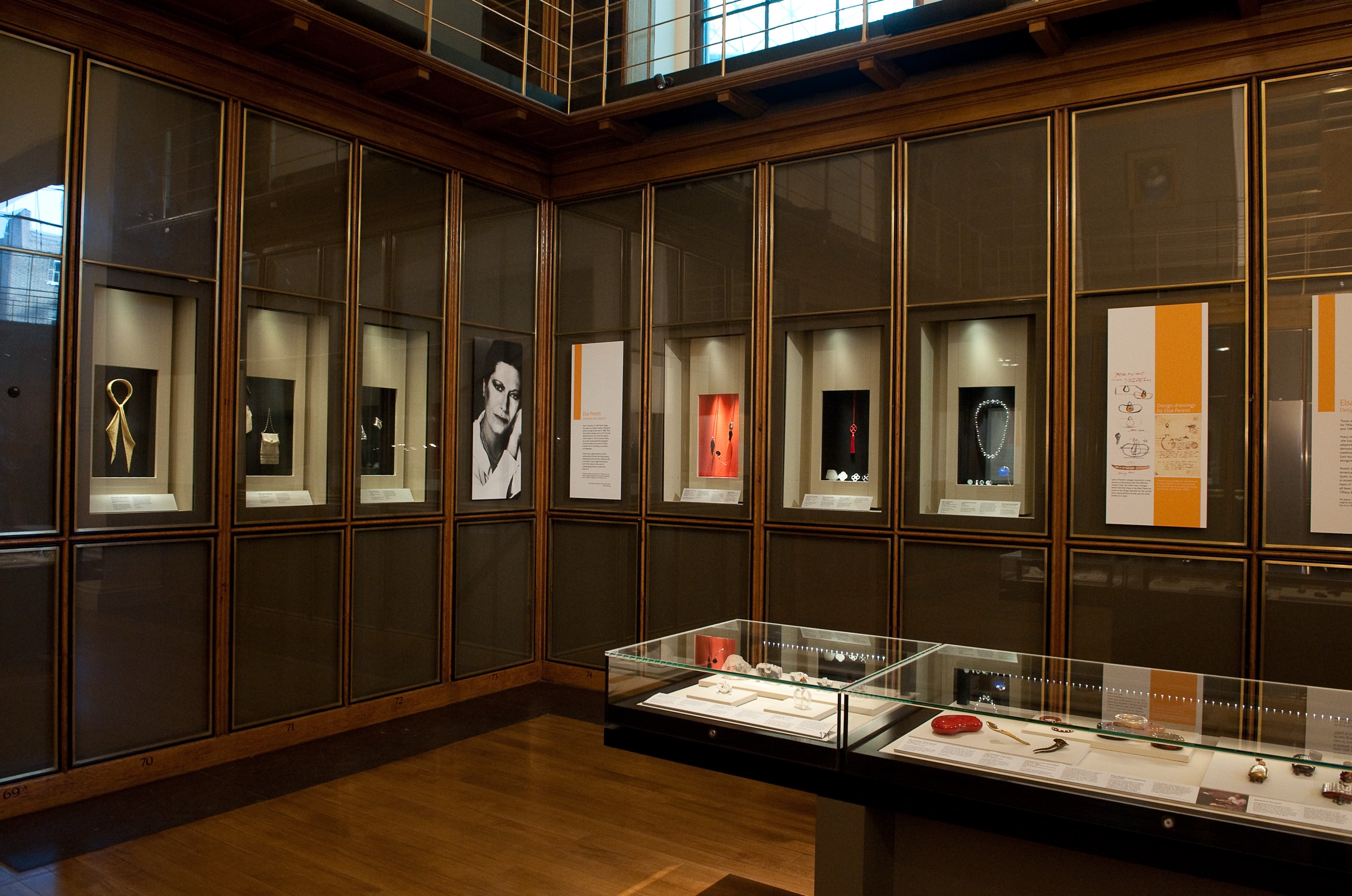
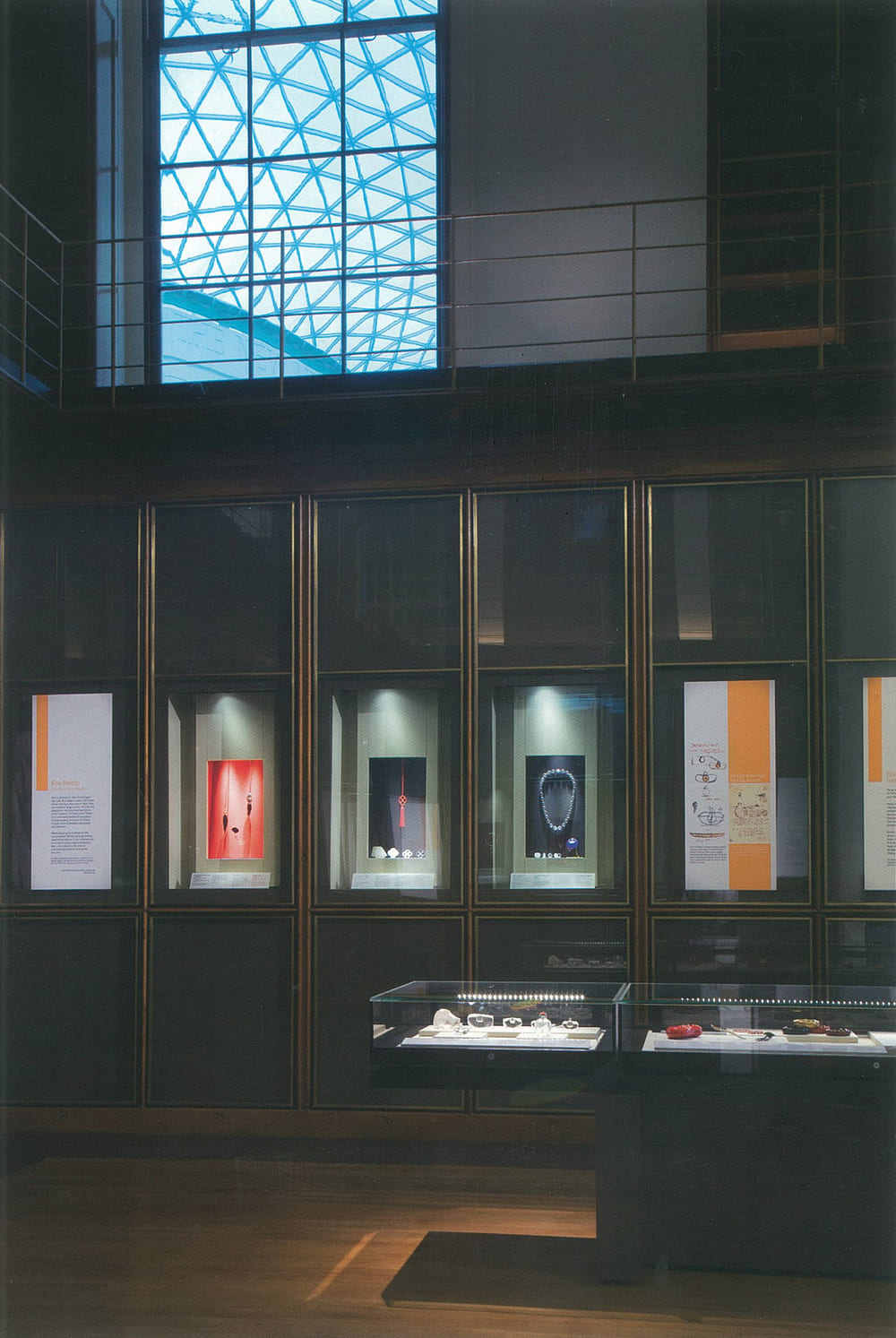
“ELSA PERETTI: JEWELLERY AND OBJECTS” EXHIBITION AT THE BRITISH MUSEUM
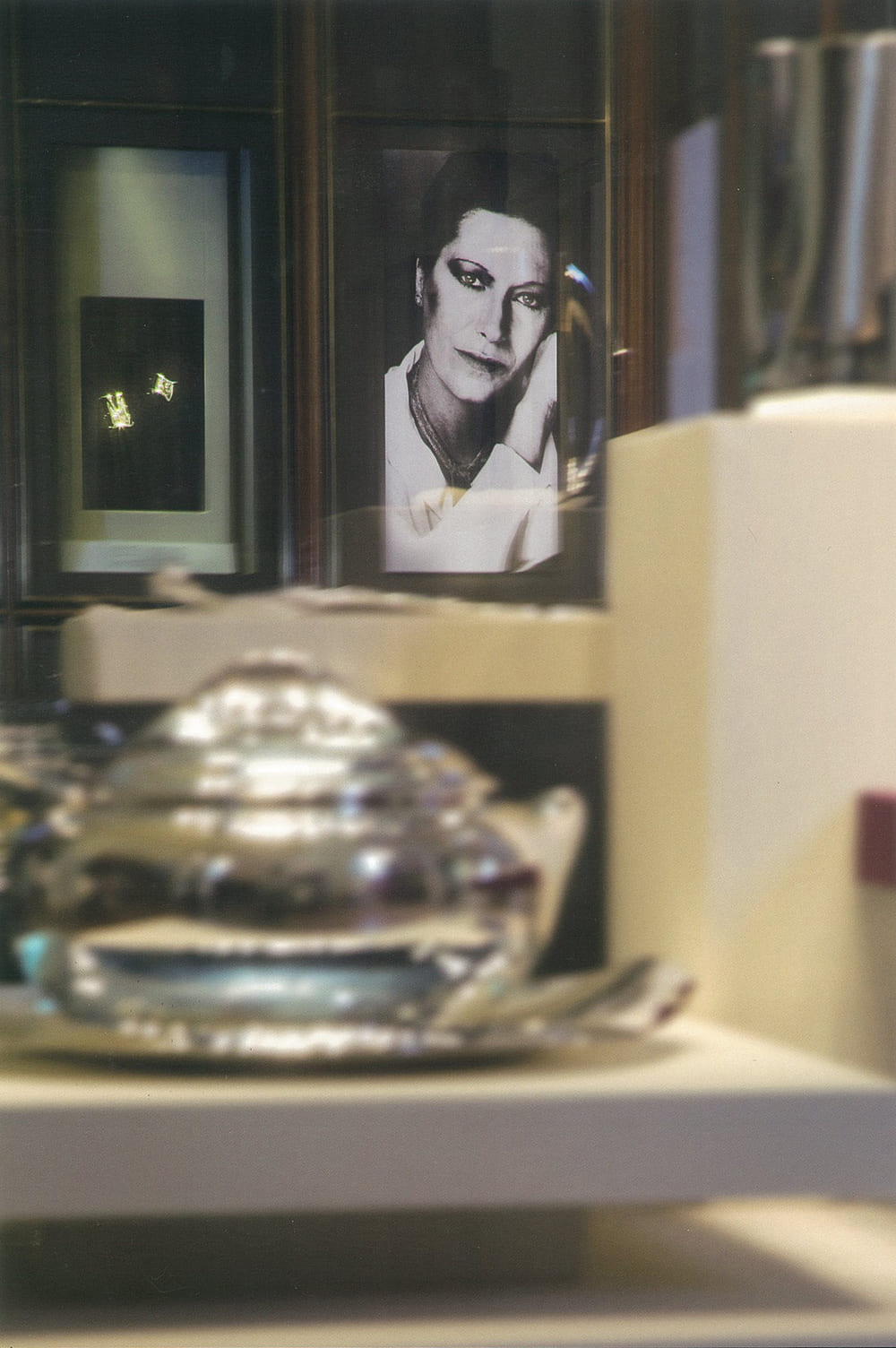
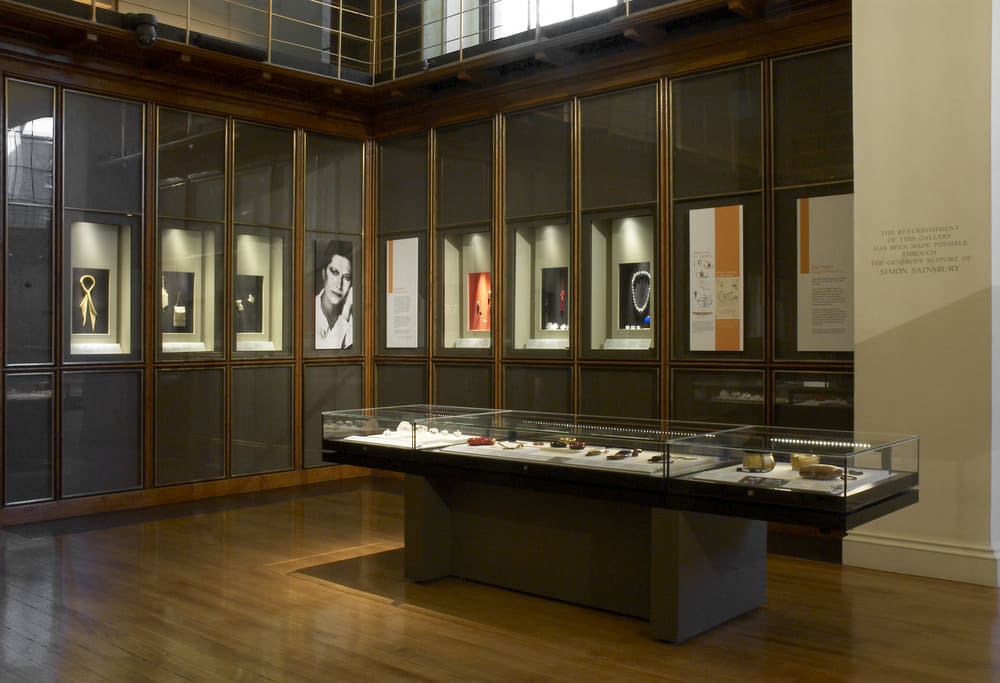
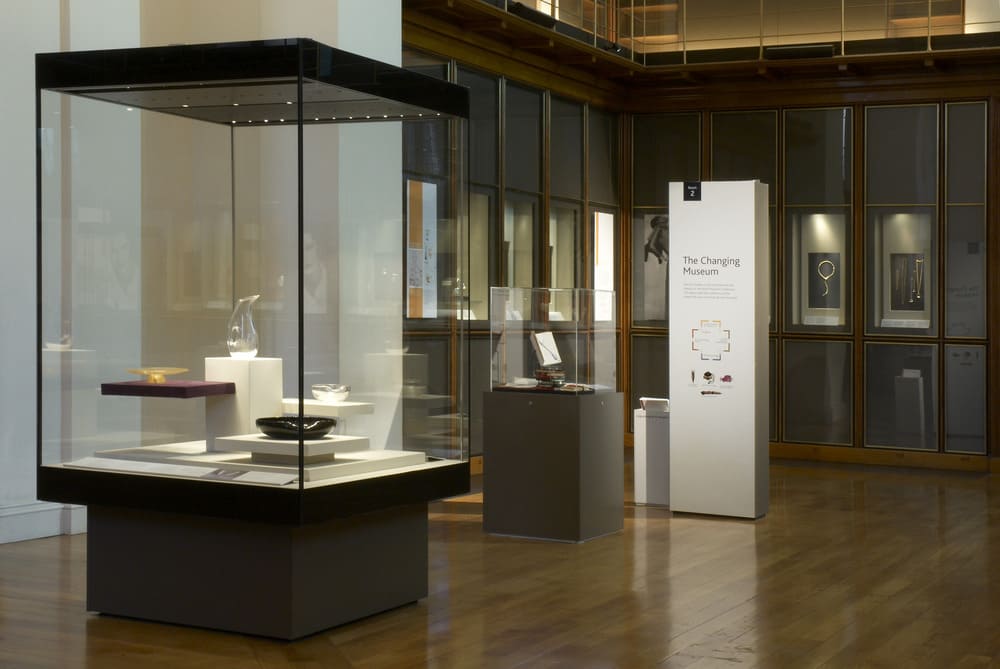
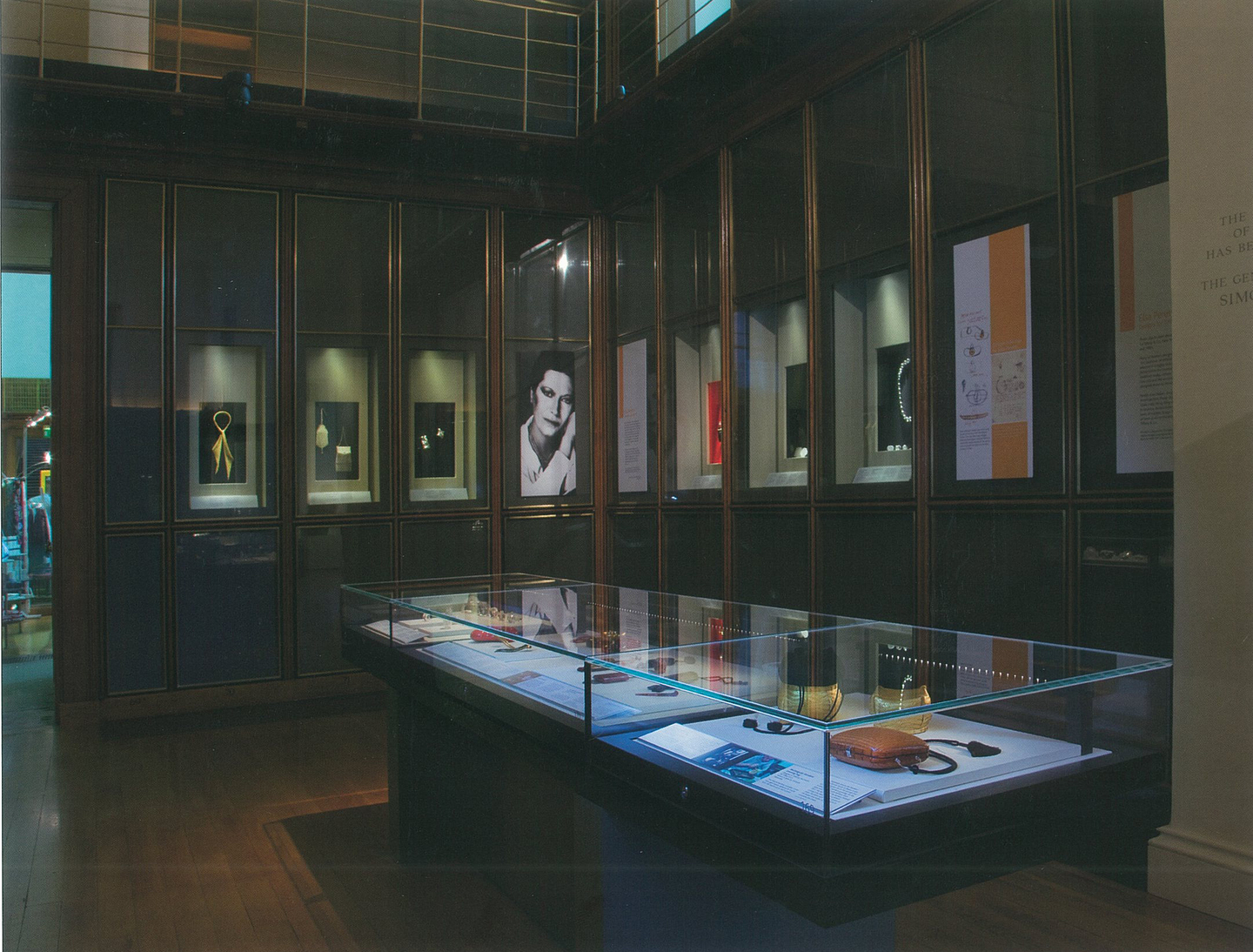
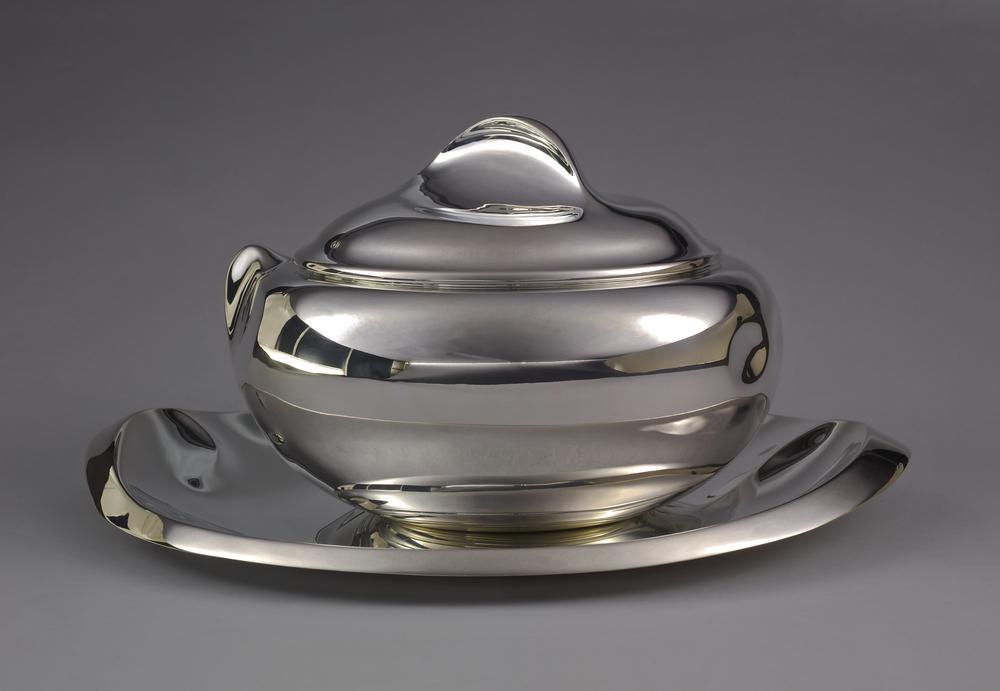
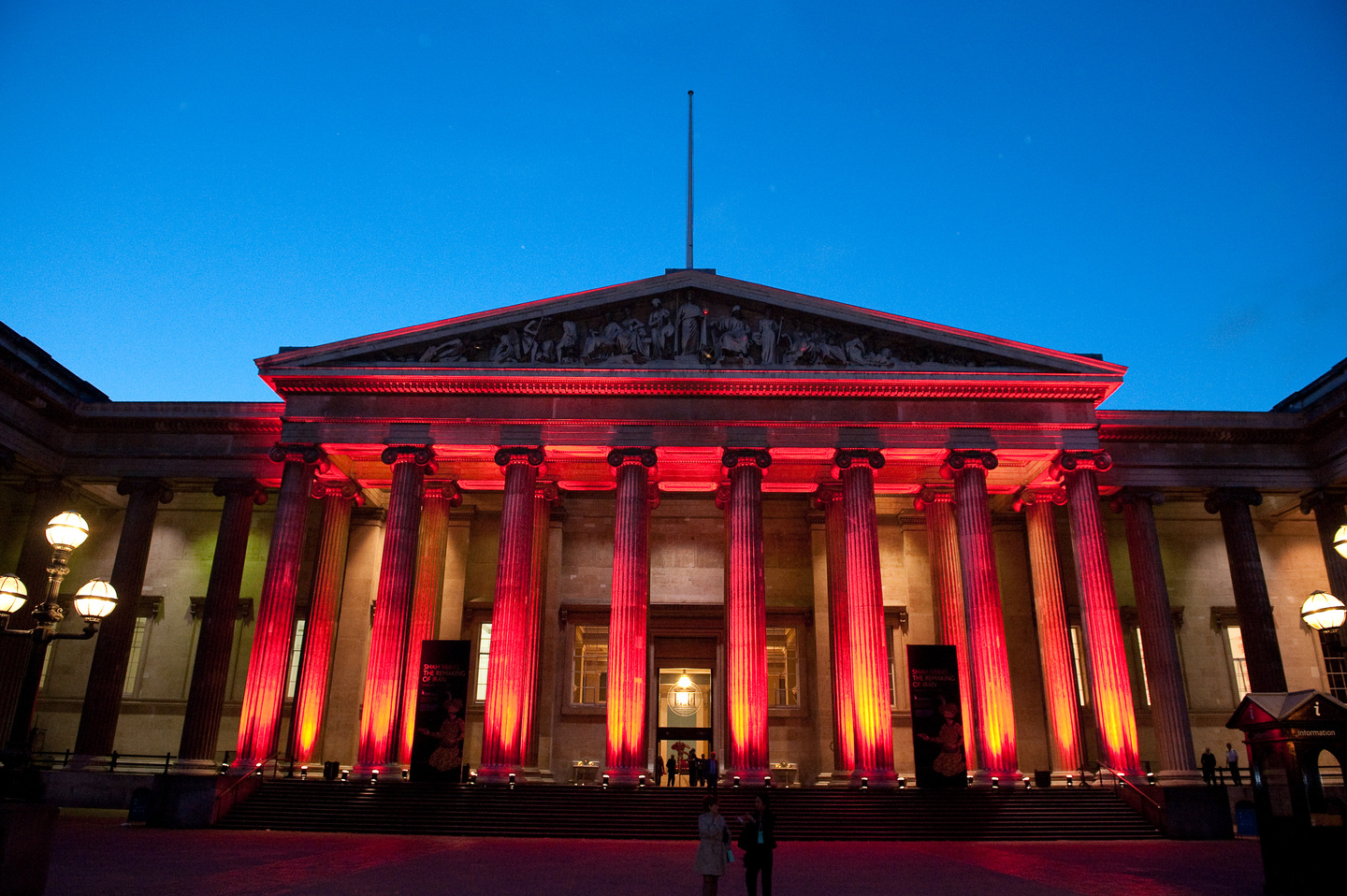
In 2009, the British Museum held the exhibition “Elsa Peretti: Jewellery and Objects” to celebrate the significant contribution of Elsa Peretti to 20th-century design. Marking the occasion, Tiffany & Co. donated approximately thirty Elsa Peretti pieces, encompassing jewellery, accessories, and objects for the home to the Museum’s permanent 20th-century collection.
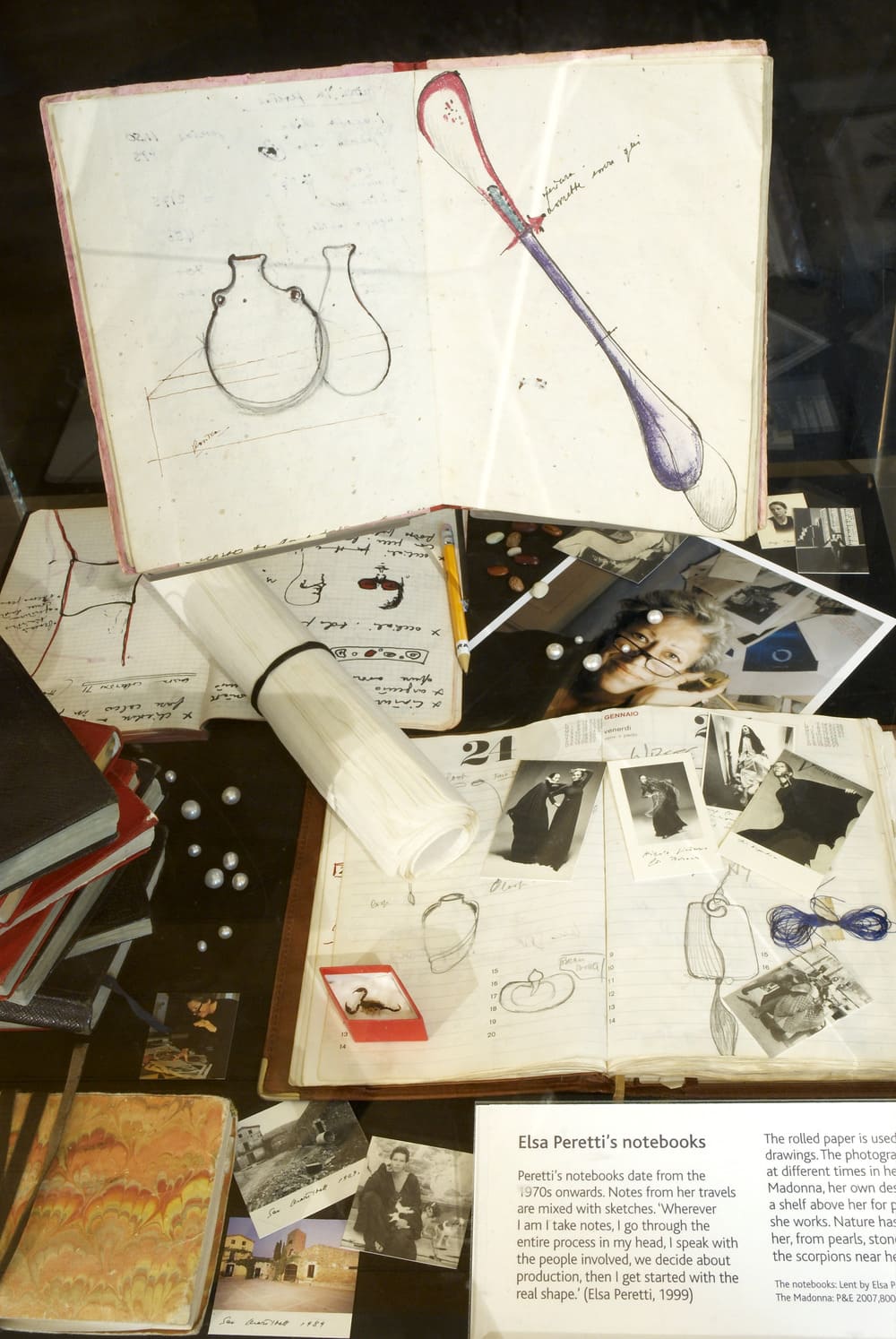
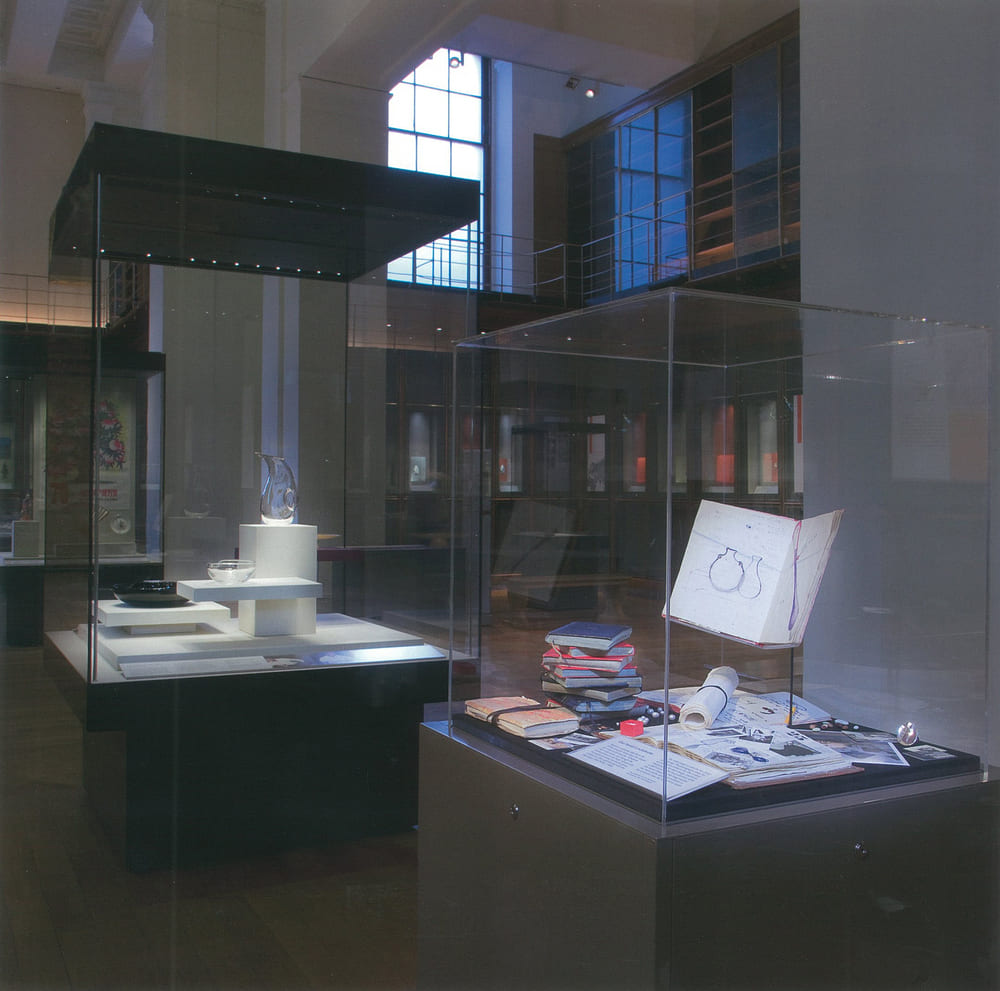
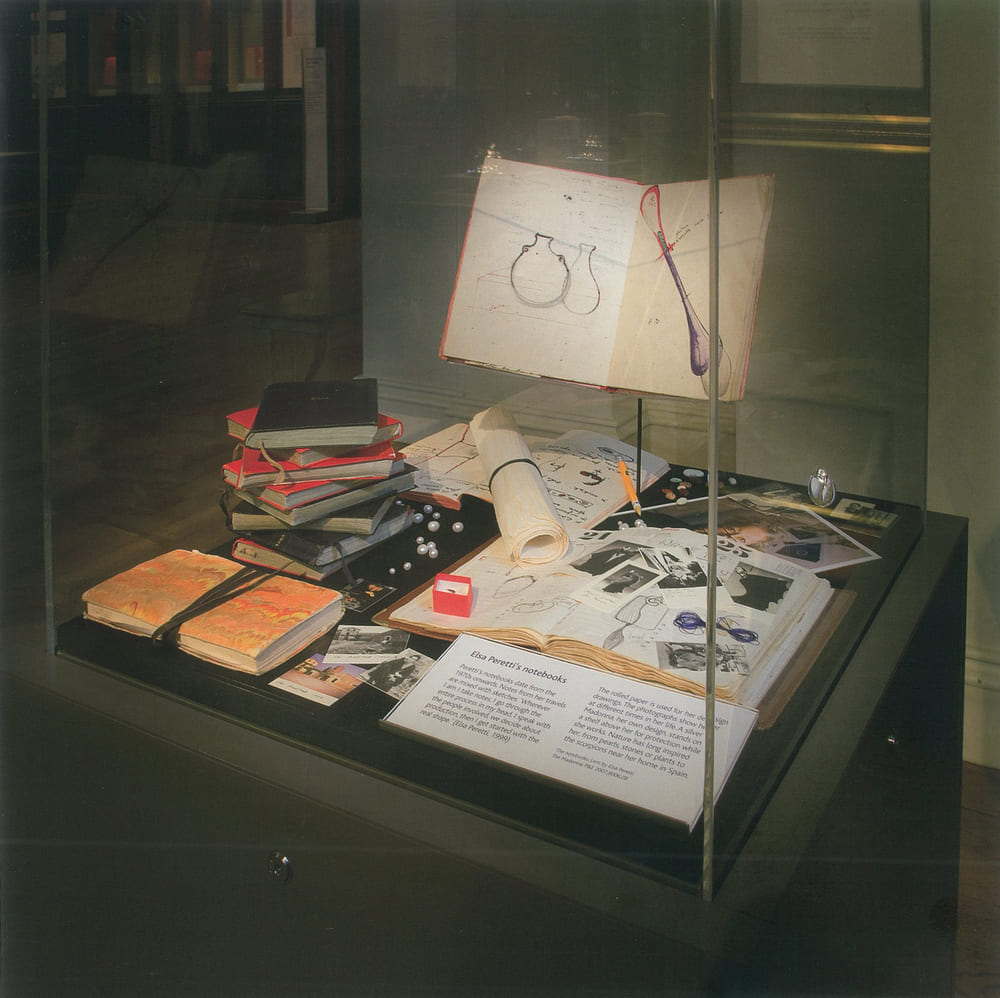
Curated by Judy Rudoe, the exhibition proposed a dialogue between Elsa Peretti’s designs and artefacts from Southeast Asia and the ancient world. This curatorial framework highlighted both the breadth of her cultural references and the highly individual manner in which she reinterpreted them. Complementing these displays, Elsa Peretti herself contributed a series of installations composed of drawings, notebooks, personal objects, and raw materials, thereby introducing an intimate and reflexive dimension to the exhibition.
With this exhibition, the British Museum has emphasized Elsa Peretti’s distinctive ability to synthesize global sources, combining refined craftsmanship with symbolic meaning within a modern design language.
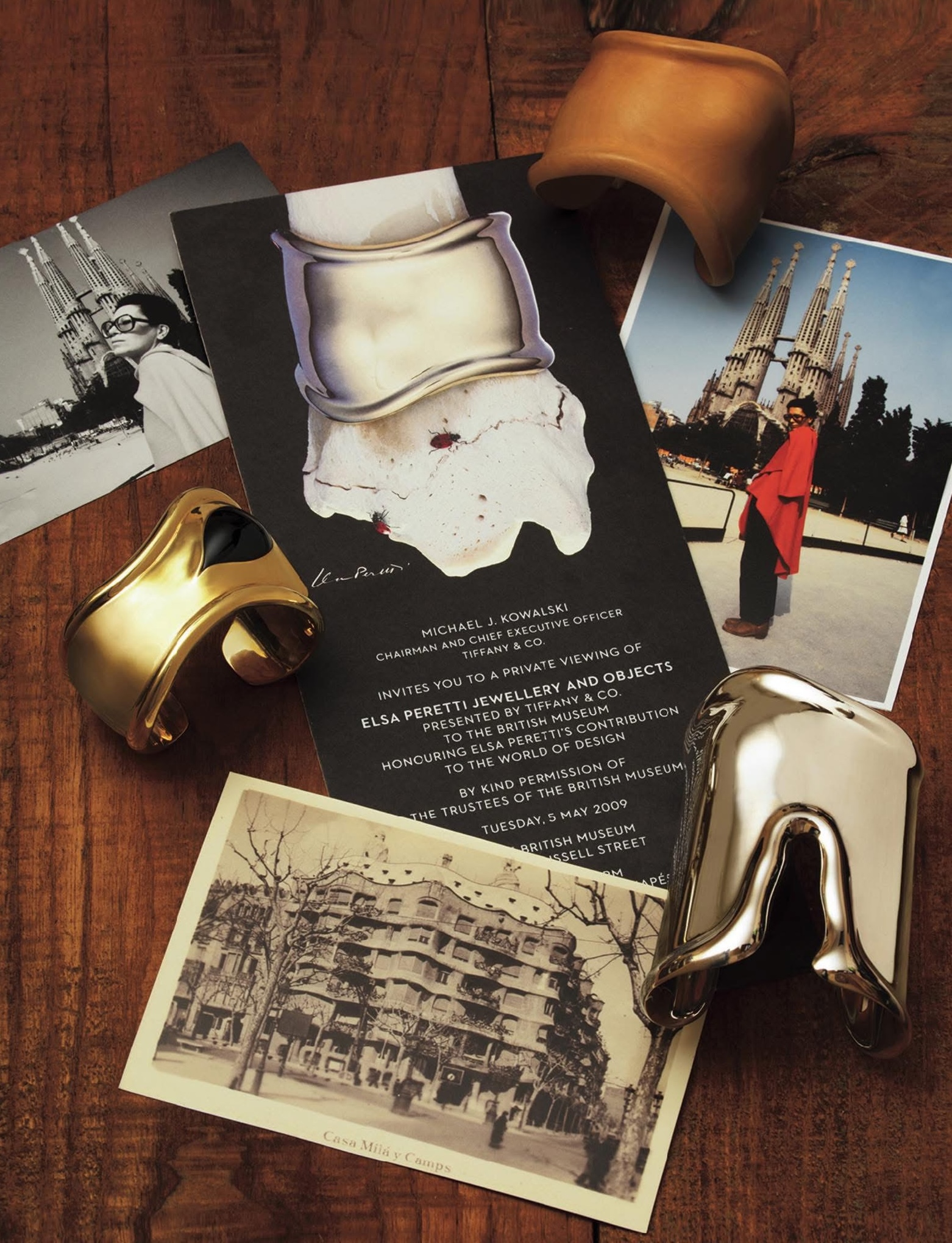 Photo by Ian Sanderson
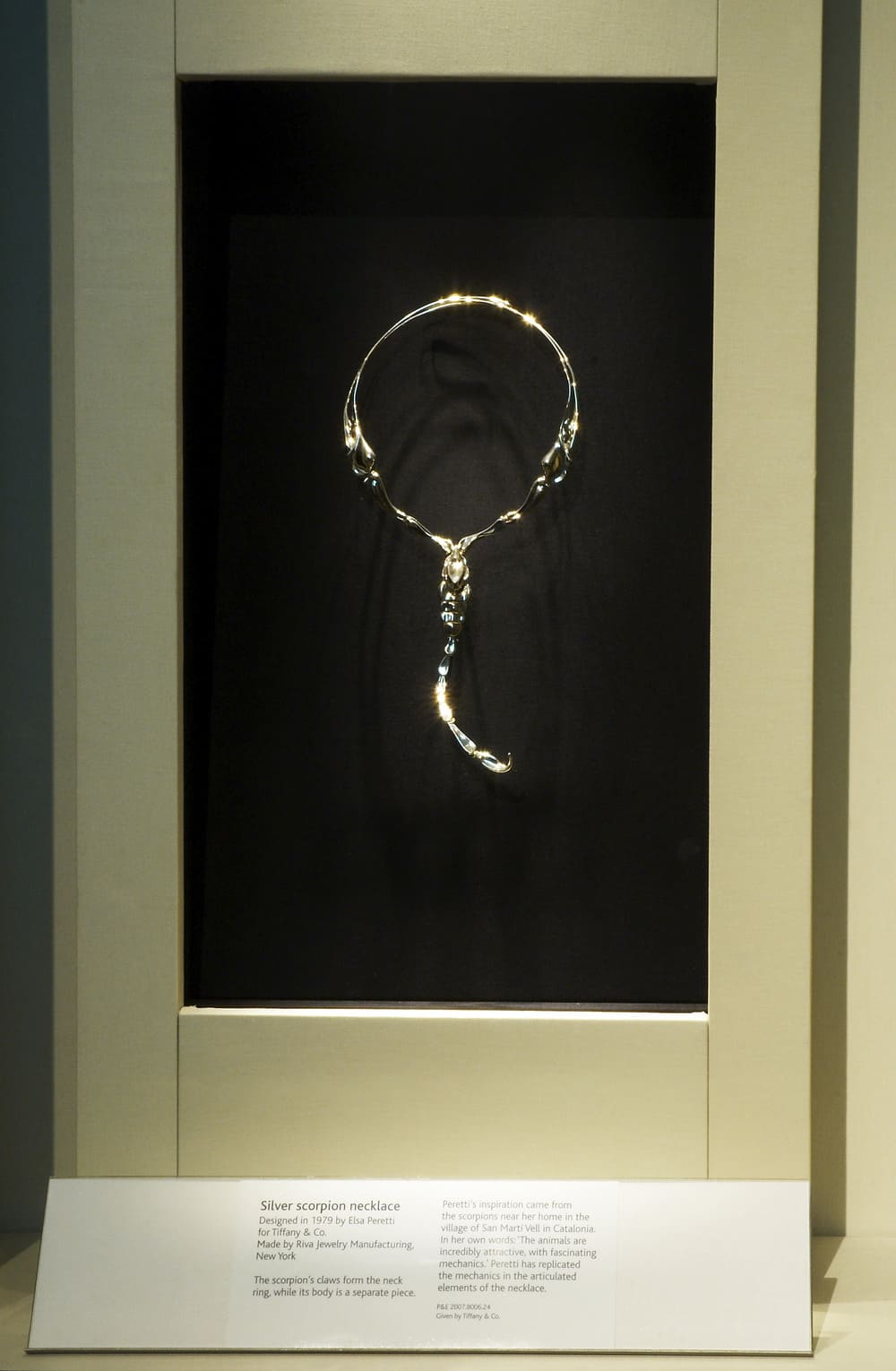
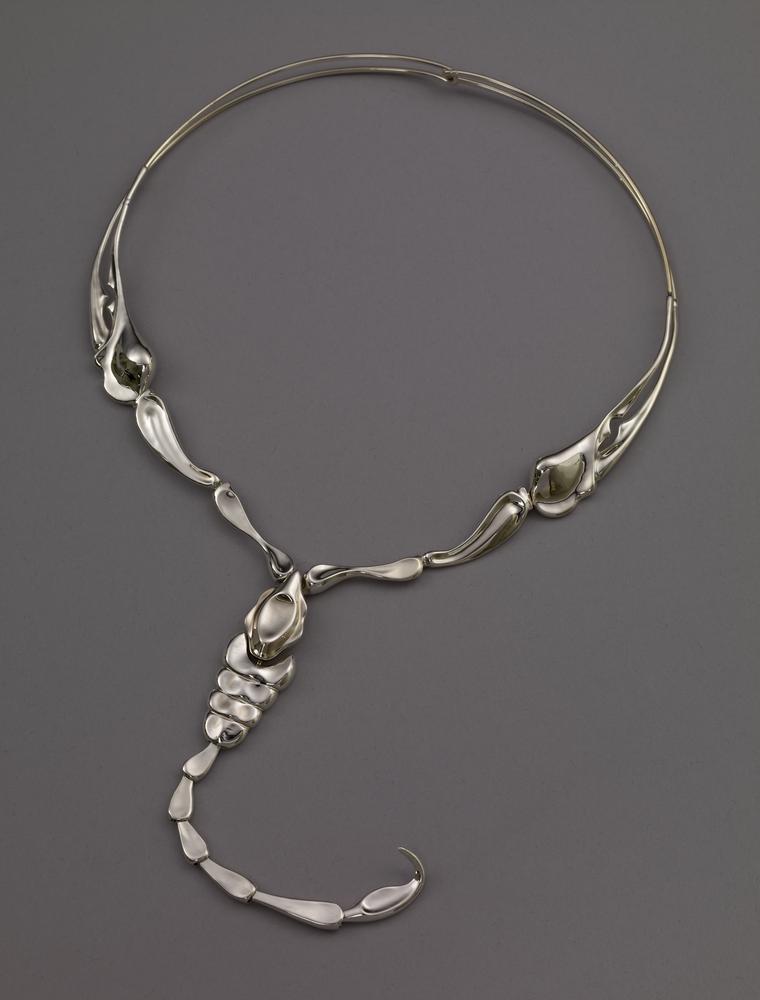
“I added a few little things, my notebooks, a dead scorpion and a few little pearls to remind us that we come from the ocean.” Interiors magazine
Carol Woolton is an author, broadcaster, and jewellery historian who served as Jewellery Editor at British Vogue for over 20 years. She was the driving force behind the creation of the jewellery editor role at both Tatler and Vogue magazines and has written extensively for leading newspapers, magazines, and online platforms around the world, including Vanity Fair, Air Mail, and The Financial Times. Alongside her editorial work, she has curated exhibitions internationally and is the author of eight books that explore the full spectrum of jewellery history, from antique and historic pieces to contemporary design. Carol Woolton is also the founder and host of the acclaimed podcast If Jewels Could Talk, where she has dedicated an episode to Elsa Peretti: “Elsa Peretti life in Jewels.”, in conversation with Stefano Palumbo, Board Member of the Nando and Elsa Peretti Foundation.
“It was a hugely important moment in London, as it’s rare for a contemporary designer to be honored in such a way.”
Carol Woolton Author & Jewelry Expert
The exhibition was conceived as a comparative and cross-cultural investigation, situating Elsa Peretti’s work within a broader historical and anthropological context. Through the juxtaposition of her designs with objects drawn from the Museum’s collections, the display foregrounded her engagement with forms, materials, and symbolic traditions from diverse geographical regions. The curatorial work with Judy Rudoe was central to this methodology, enabling a dialogue between contemporary design practice and the epistemological framework of the museum.
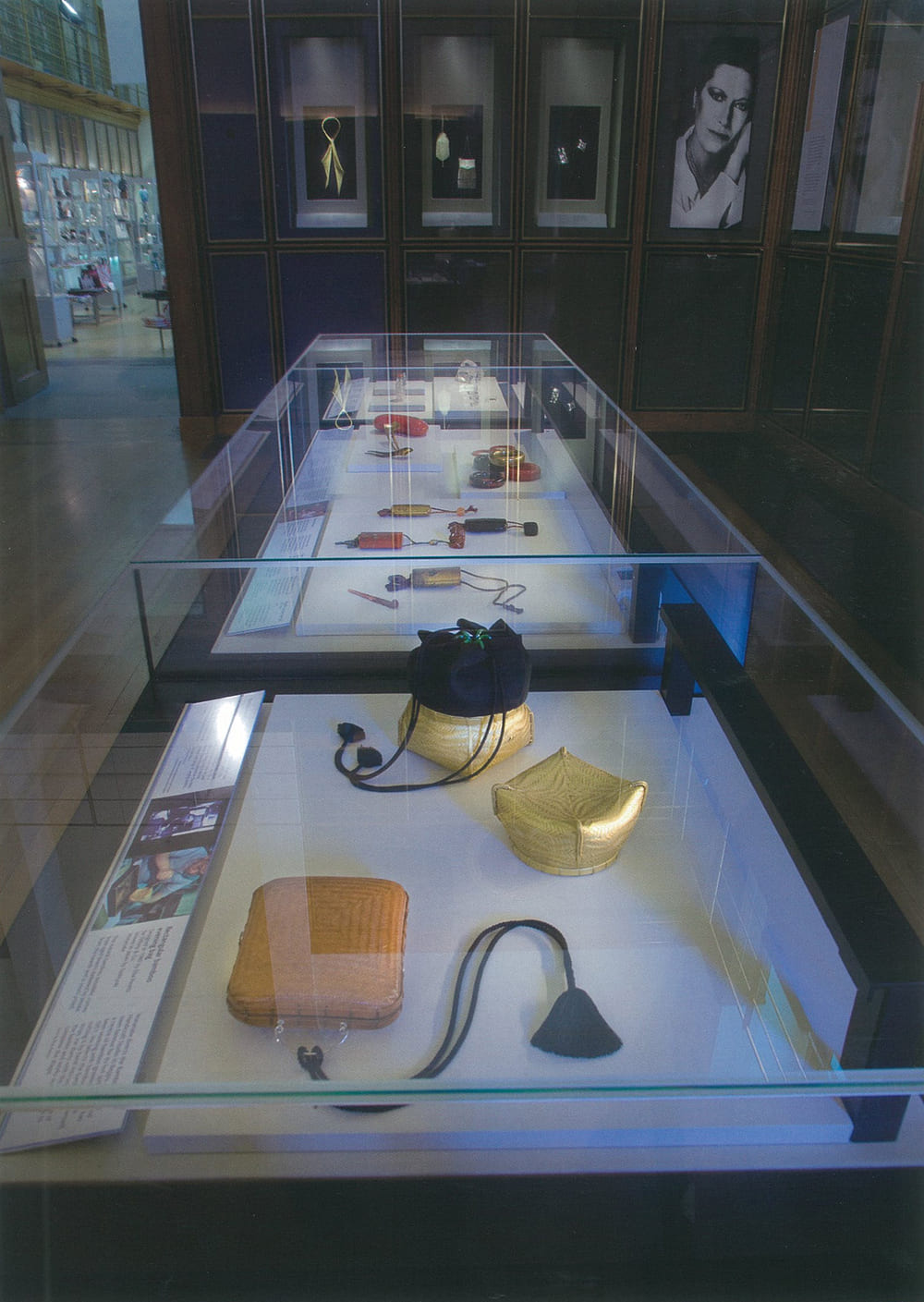
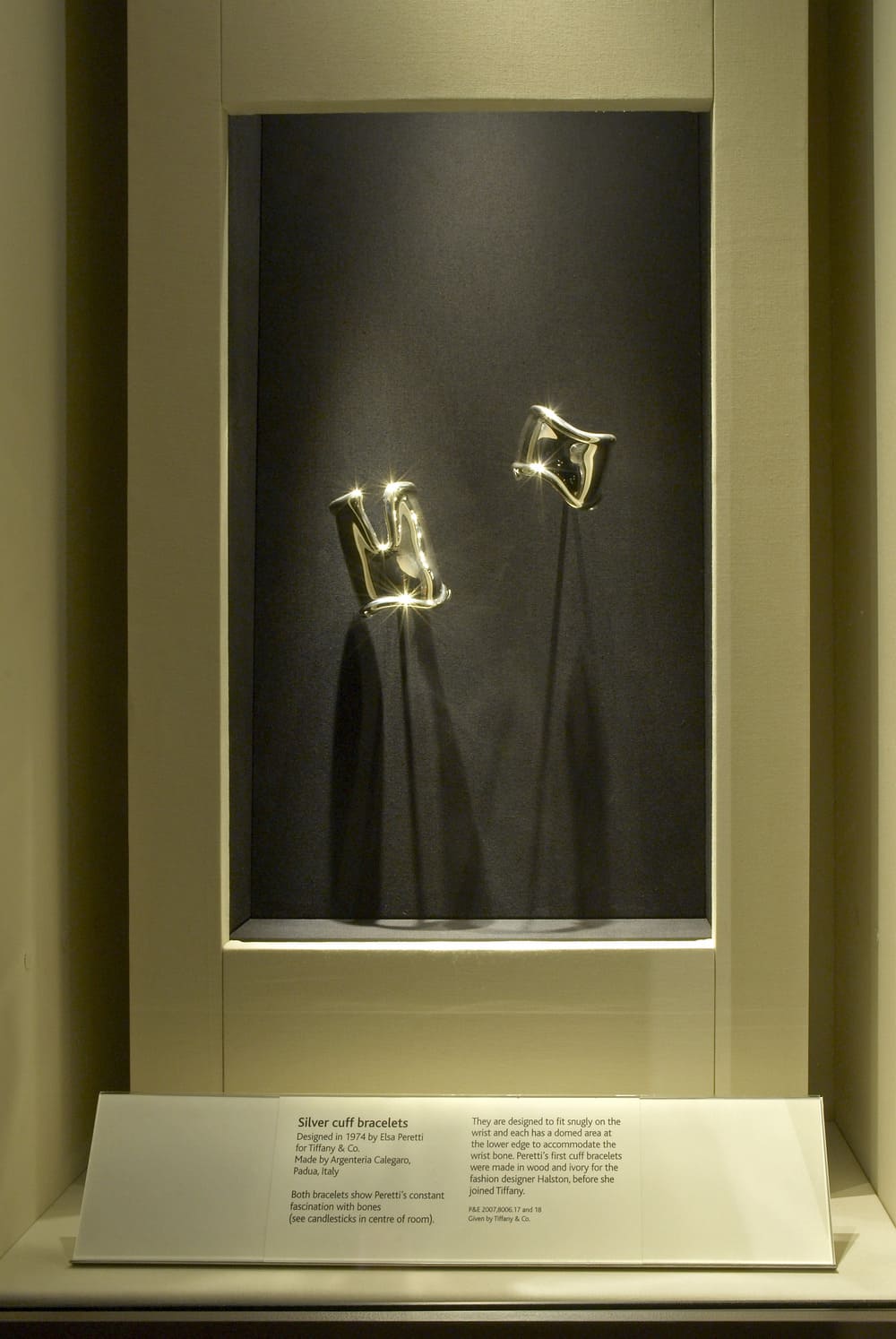
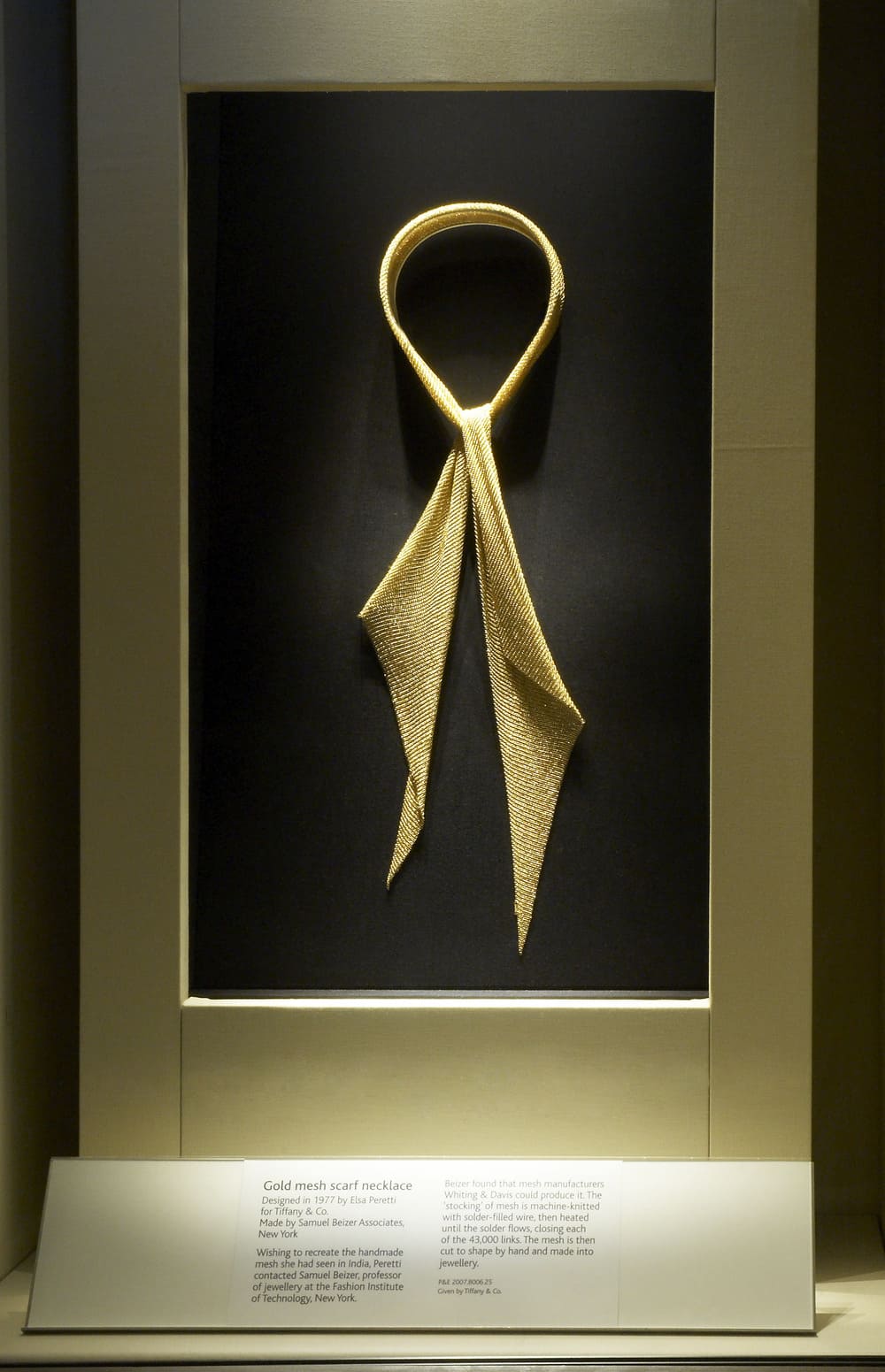
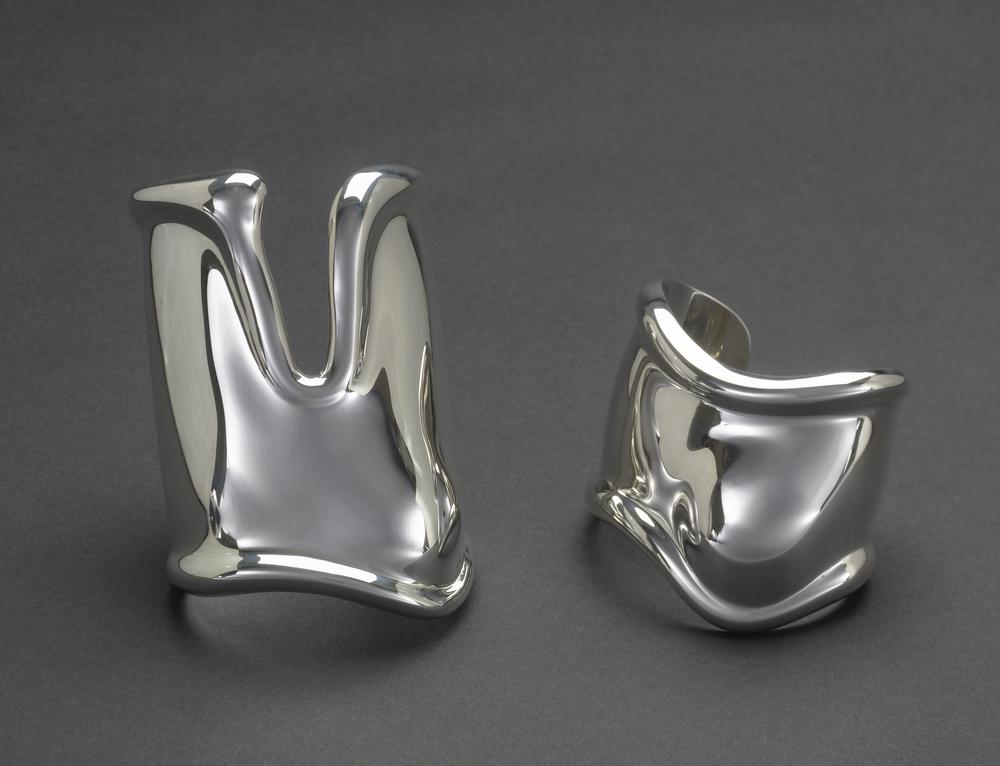
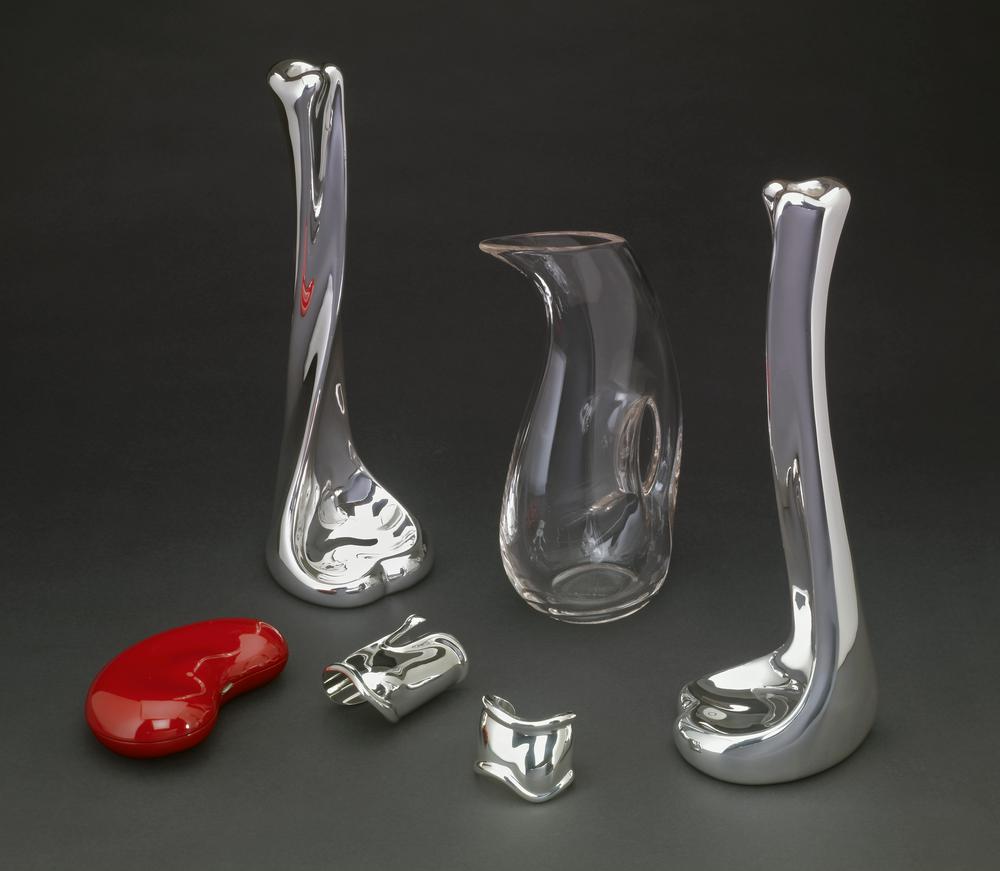
A central focus of the exhibition was the wide range of Elsa Peretti’s production, examined through the lens of her evolving formal vocabulary and sources of inspiration. Early works such as the Bone Cuff exemplify her sustained interest in organic forms and the human body, while pieces like the gold mesh scarf necklace, first encountered in India, demonstrate her engagement with textile traditions and fluid structures.
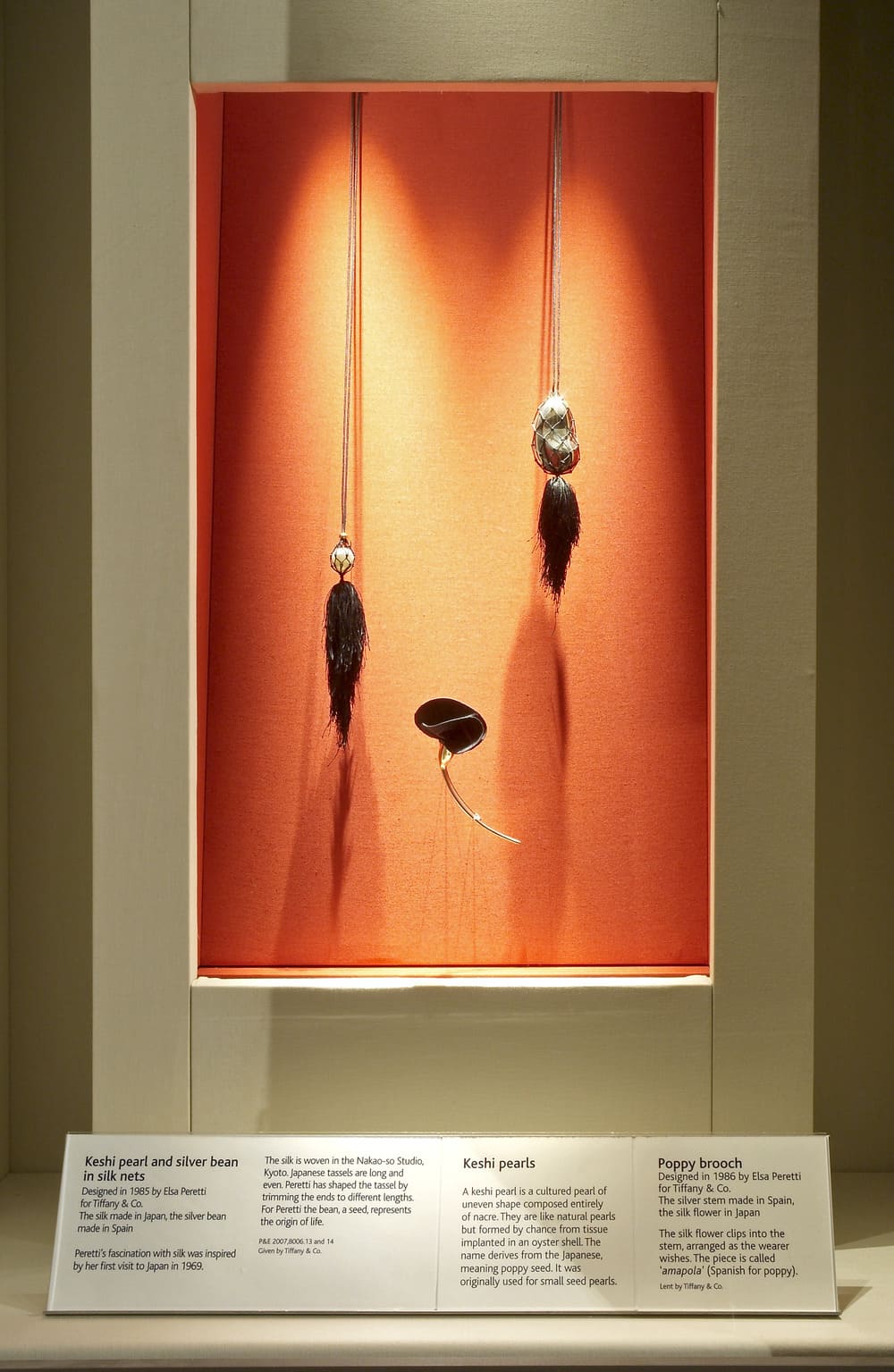
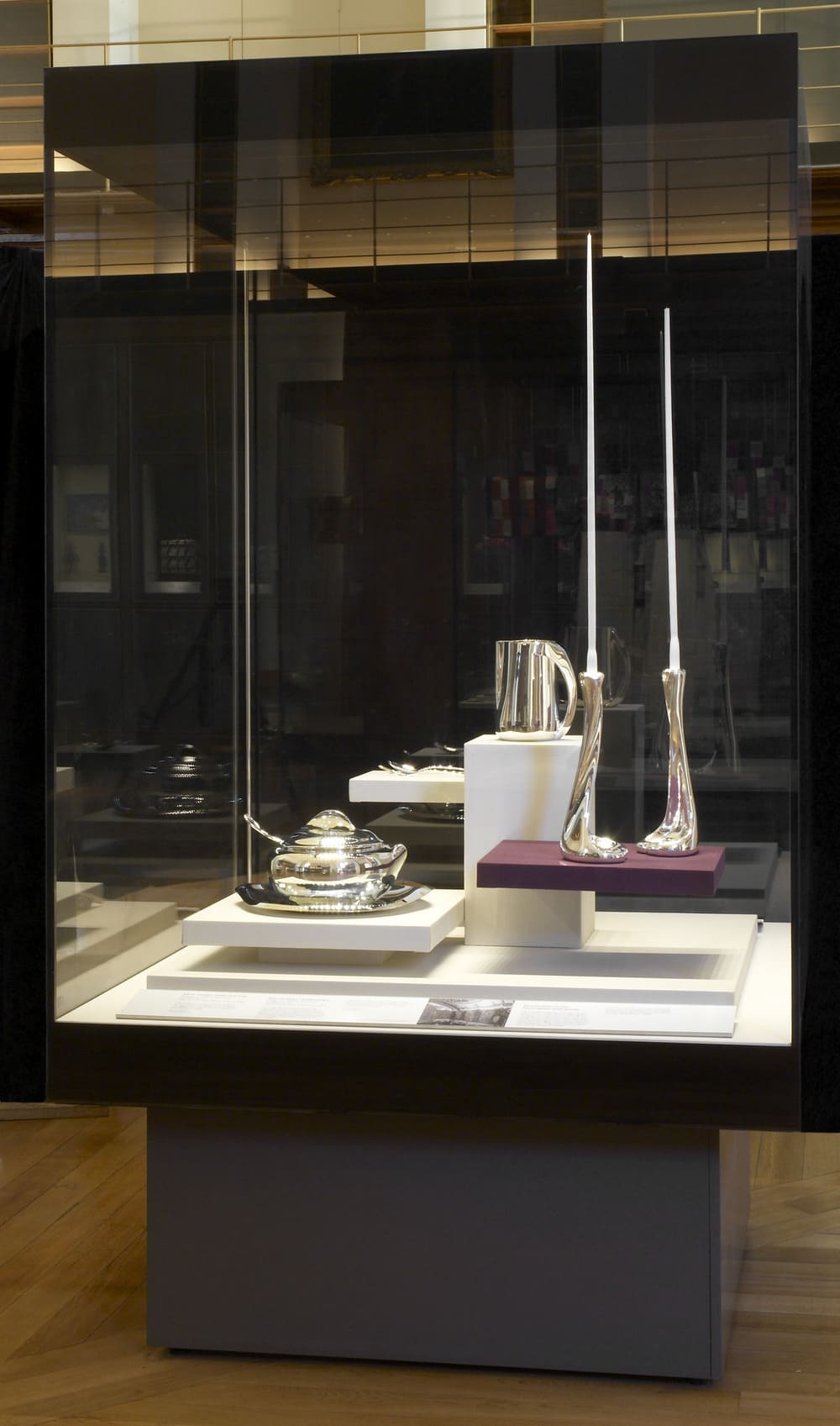
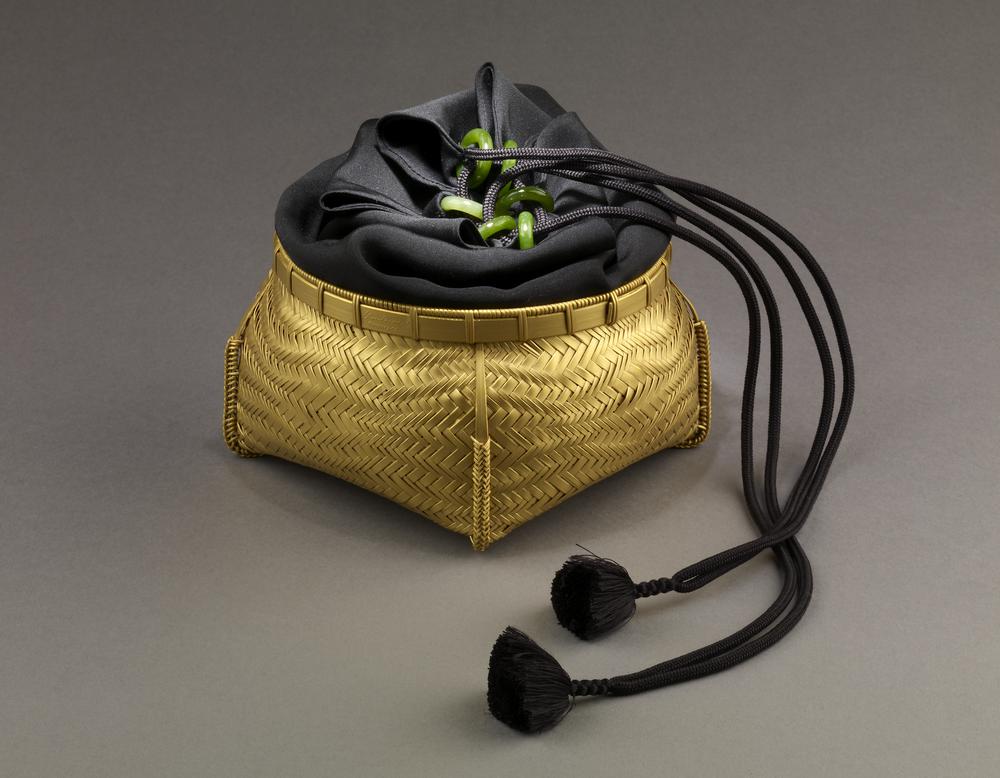
Similarly, the Bean, presented in a silk net and inspired by her visit to Japan in 1969, reflects her ability to distill natural and cultural references into essential, sculptural forms. This trajectory extends to her Home Collection of the 1980s, characterized by an intuitive approach to functionality, in which objects are shaped according to the gestures of the hand and often incorporate subtle thumb indentations.
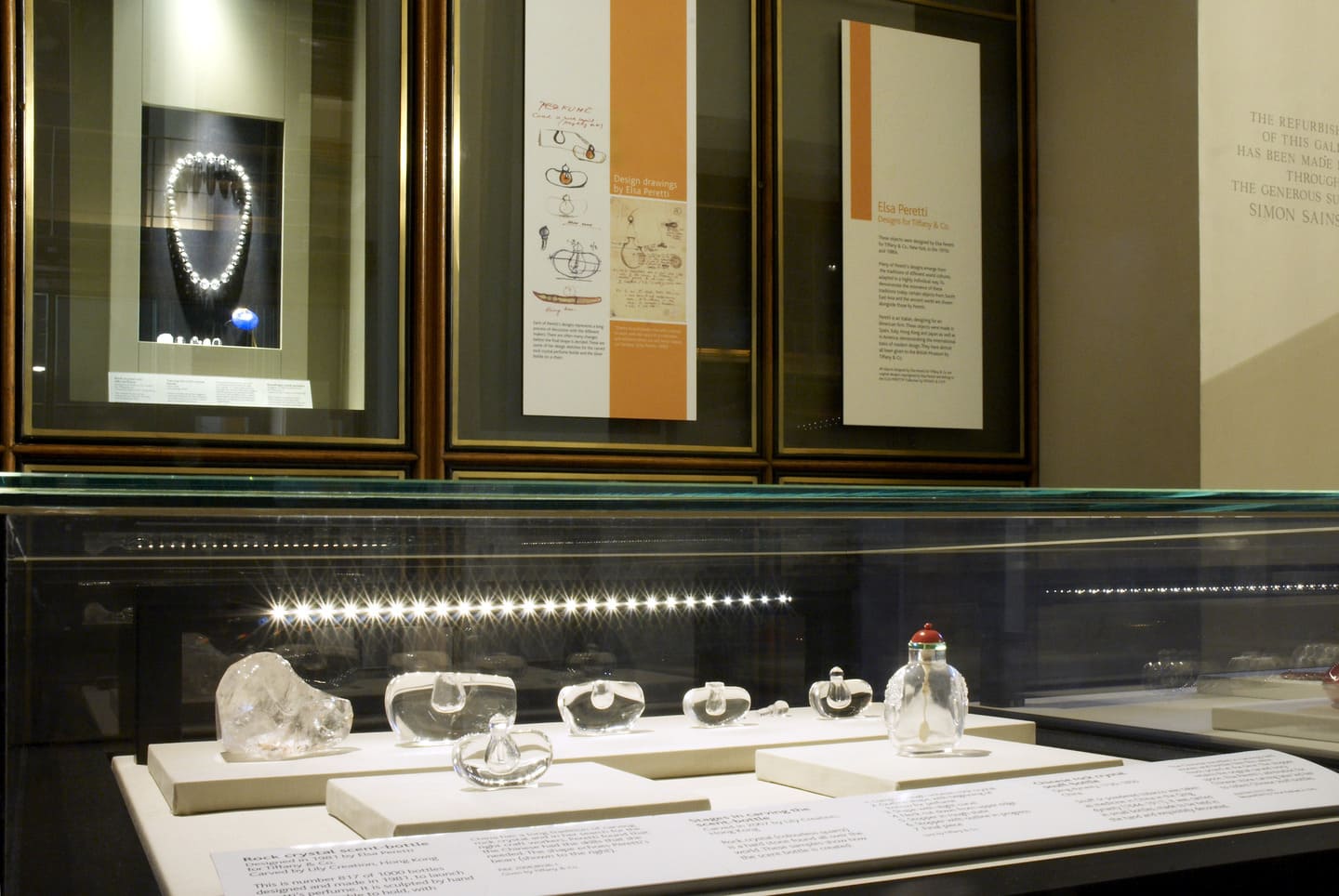
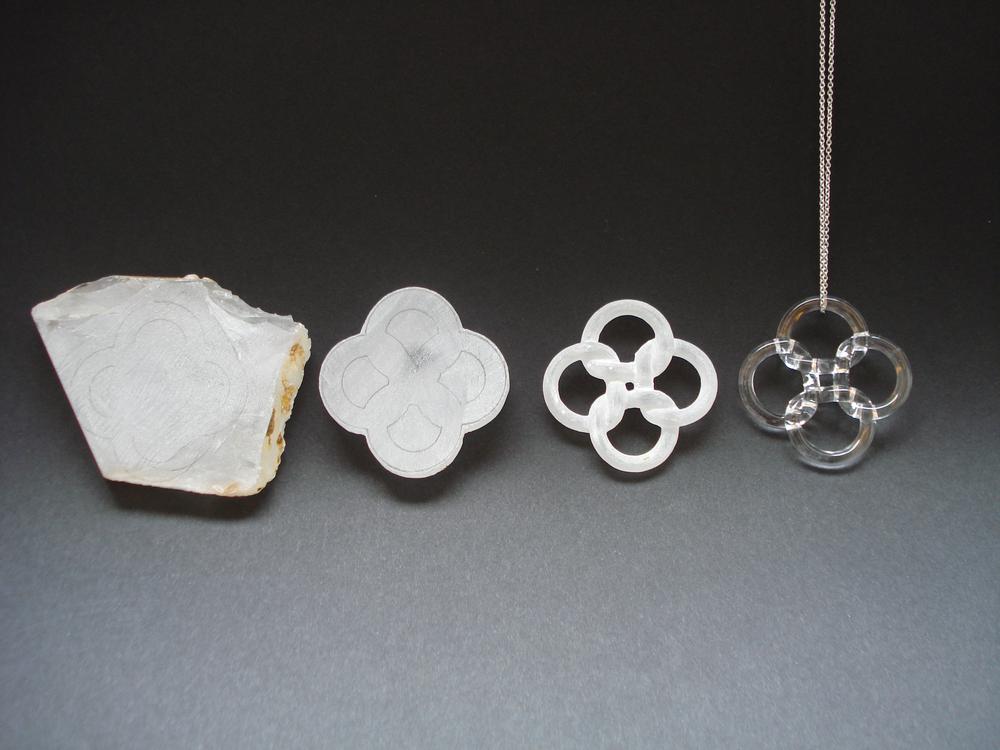
The section devoted to rock crystal illuminated Elsa Peretti’s engagement with traditional techniques and her commitment to exceptional craftsmanship. The rock crystal scent bottle, designed in 1981 for the launch of her perfume and carved in Hong Kong, exemplifies this approach. Its hollowed thumb grip not only enhances usability but also reflects a refined understanding of tactile interaction.
This work was displayed alongside a Chinese rock crystal snuff bottle from the Qing dynasty (1730–1850), establishing a dialogue with the long-standing tradition of stone carving in China. Such juxtapositions emphasized Peretti’s methodological approach: the study of historical techniques combined with collaboration with highly skilled artisans to produce objects that are both contemporary and timeless.
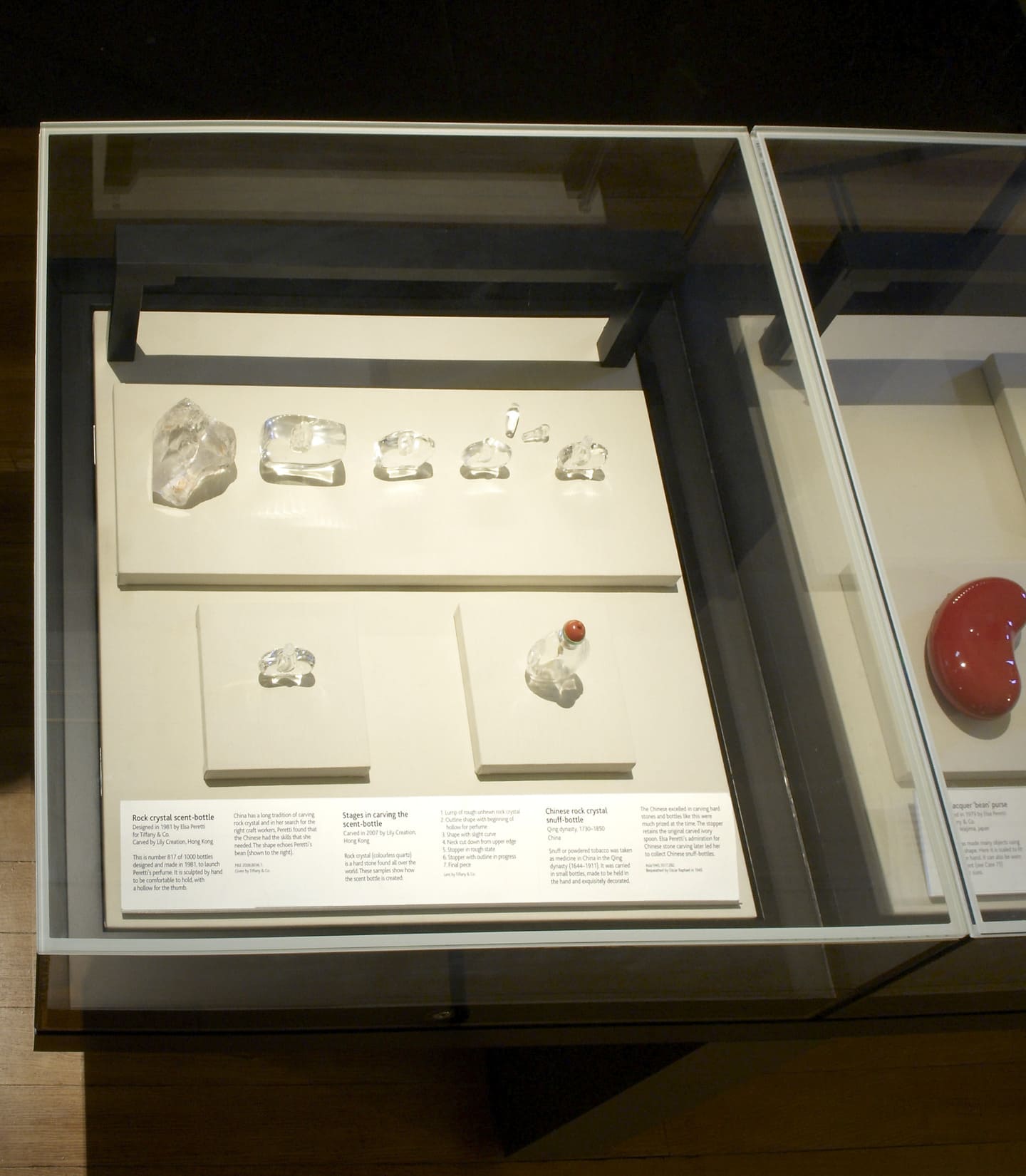
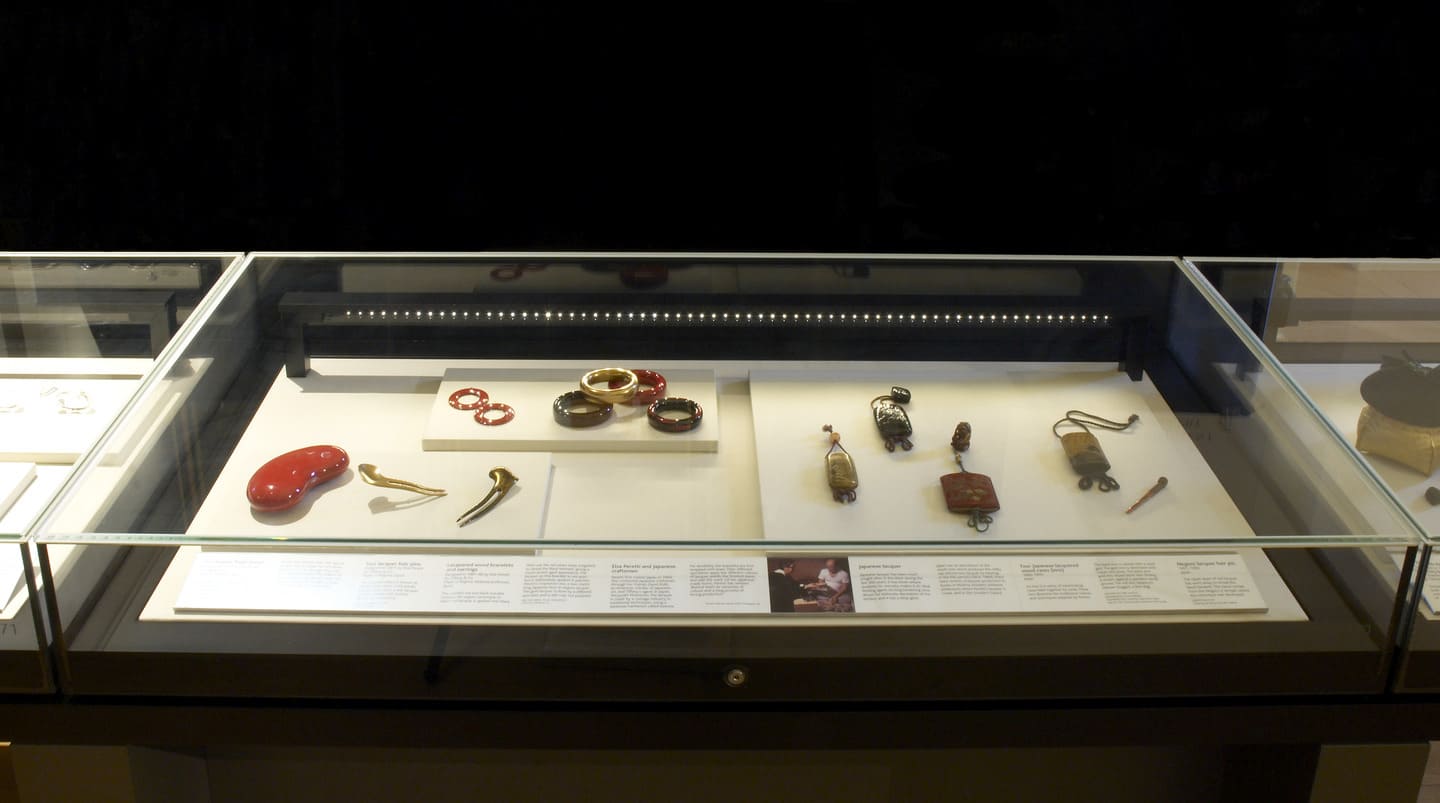
Lacquer constituted another significant focus of the exhibition, reflecting Elsa Peretti’s deep engagement with Asian material culture. First encountered during her travels in 1969, lacquer became a central medium through which she explored colour, surface, and technique.
Peretti herself acknowledged the cultural depth of these traditions, noting of Japanese objects: “Behind them lie centuries of culture and a long process of loving production.” Her designs, including bracelets, hairpins, earrings, and the Bean purse, demonstrate a sophisticated reinterpretation of this ancient technique.
Particularly notable is her use of the negoro style, in which layers of red lacquer are applied over black. This approach was inspired by a two-metre-long Japanese bow she encountered during her travels, illustrating the direct translation of observed artefacts into her design practice.
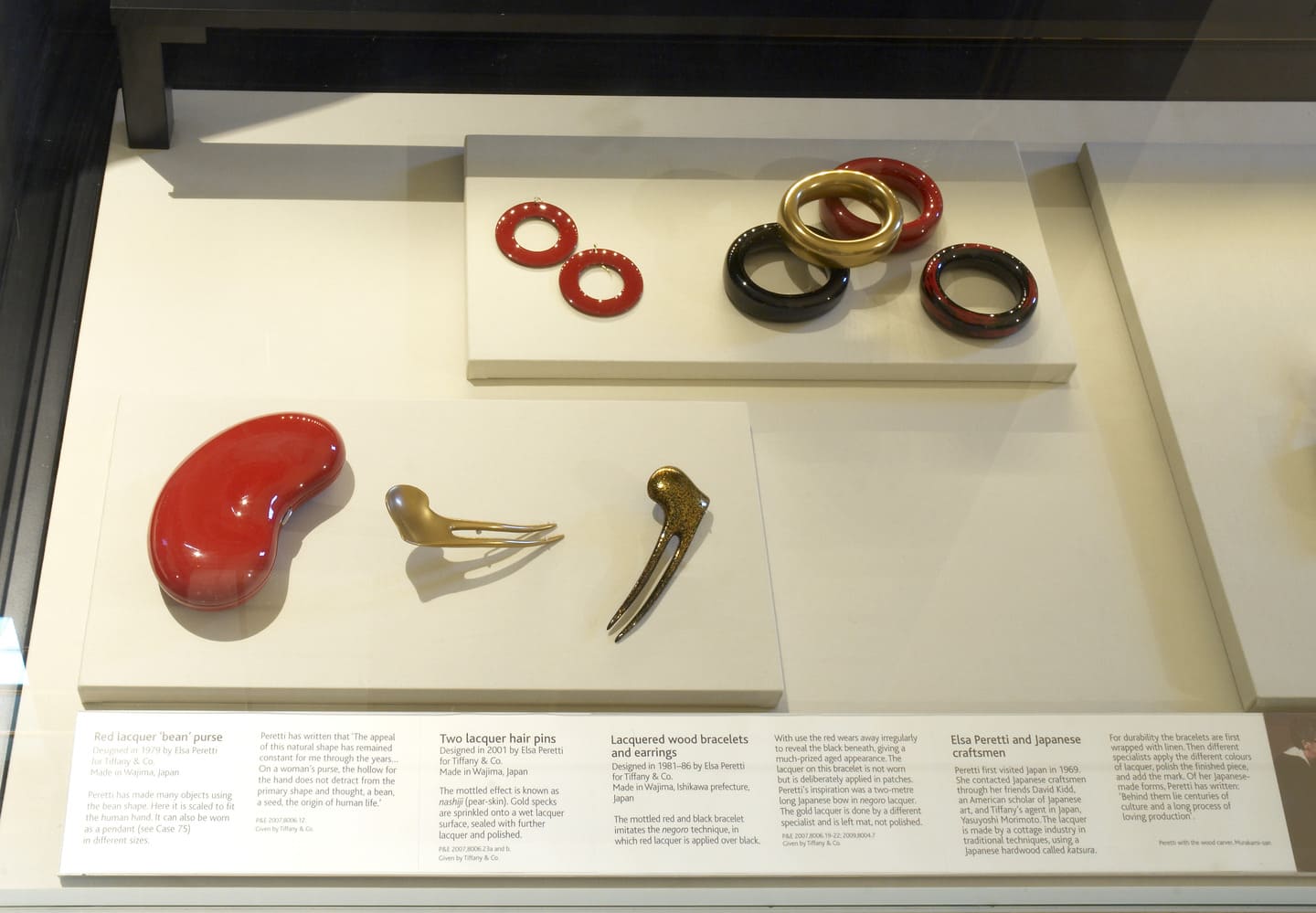 Photo Courtesy Tiffany and Co.
A key aspect of the exhibition was the exploration of symbolic continuity across time and cultures. Elsa Peretti’s works were frequently presented alongside ancient objects to reveal shared conceptual frameworks, particularly in relation to protection, ritual, and adornment.
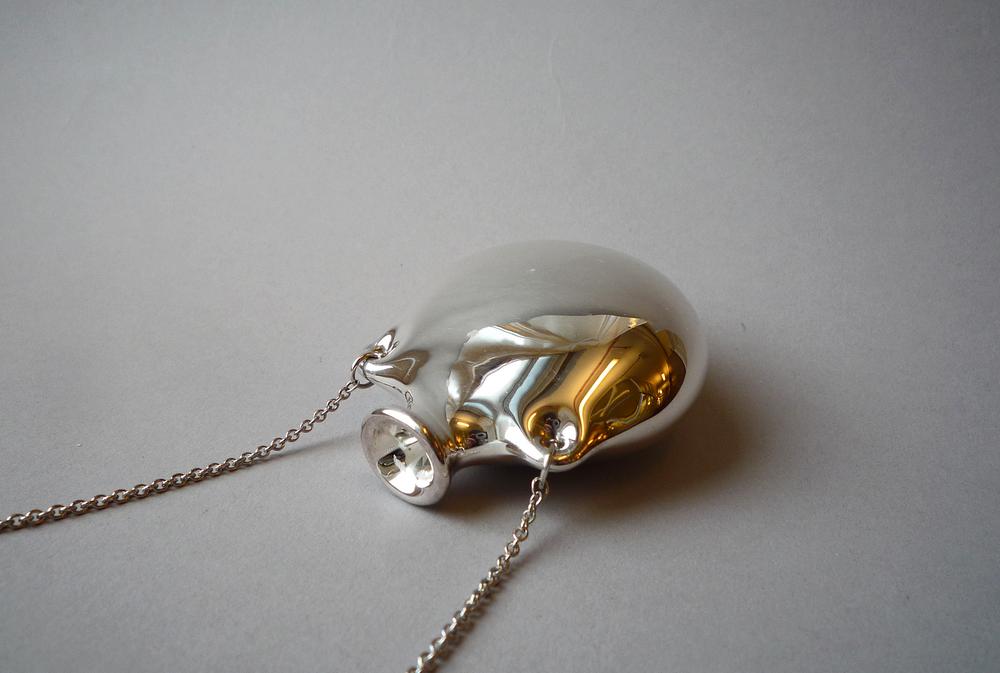
For example, pottery pilgrim flasks from Turkey (AD 300–700), originally worn as protective amulets, were juxtaposed with Elsa Peretti’s silver bottle. This comparison highlighted the persistence of certain symbolic forms and their reinterpretation within a modern context.
Such displays demonstrated Peretti’s profound knowledge of historical artefacts and her ability to translate their meanings into contemporary objects that retain both emotional and cultural resonance.
“I was lucky enough to work with Elsa Peretti on an exhibition at the British Museum in 2009; to show how she adapted objects from the past and made them relevant today we displayed her pendant silver bottle with a Byzantine protective pilgrim’s ampulla for holy oil jewellery.” Curator of the British Museum and Specialist in the history of jewelry
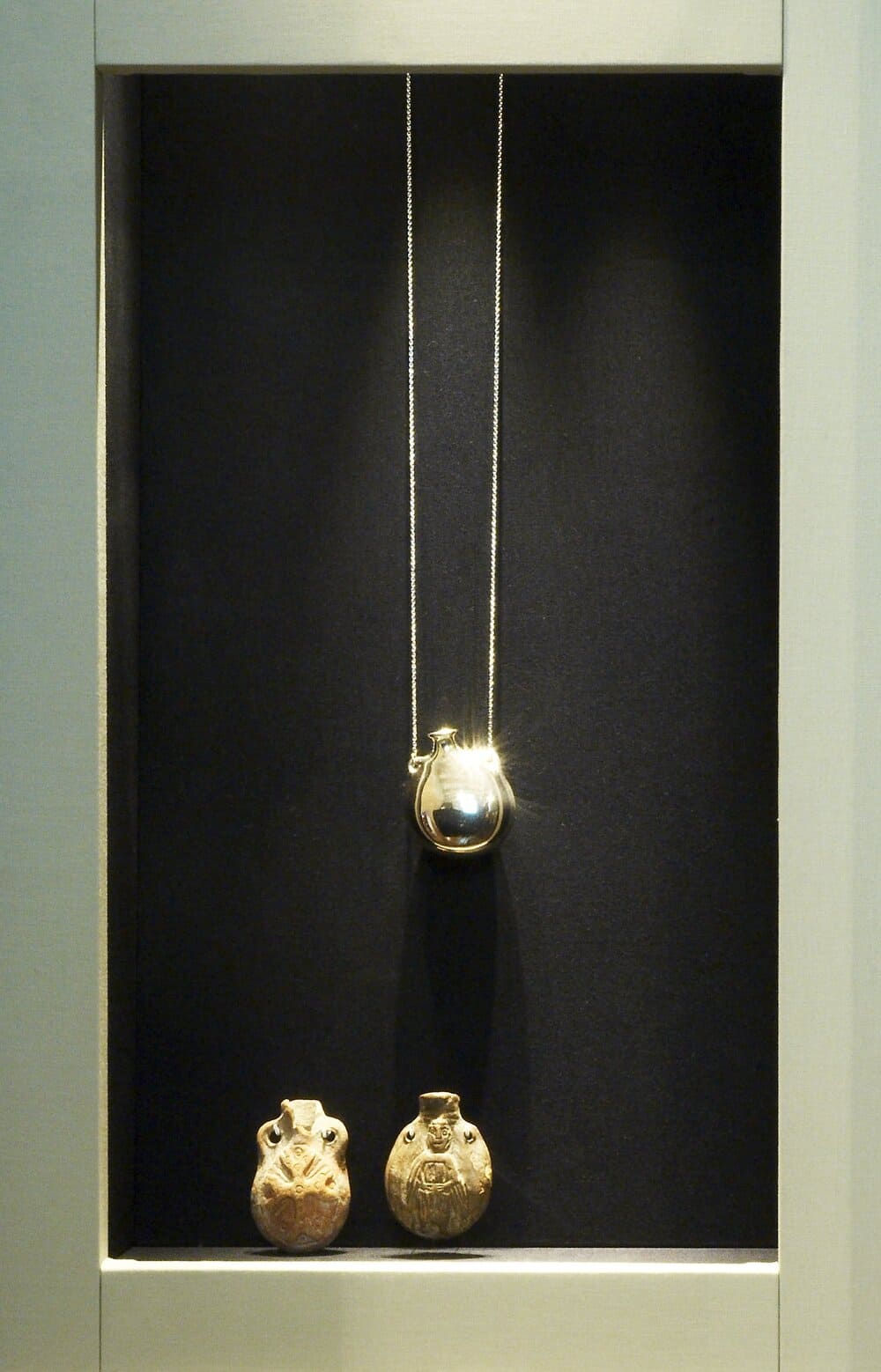 Photo Courtesy Tiffany and Co.
“Modern design of the kind represented by Peretti’s work for Tiffany is rarely shown in the context of world cultures of all periods; we have chosen to do so to encourage a different approach to such objects and demonstrate that they can combine superb craftsmanship and symbolic meaning in a modern age.”
Judy Rudoe British Museum Magazine Spring/Summer 2009, Issue 63
BRITISH MUSEUM
Founded in 1753, the British Museum is the world’s first national public museum, distinguished by its unique ability to bring together the cultures of the world under one roof, spanning continents and oceans. Its collection of over eight million objects offers an extraordinary exploration of human diversity, from small communities to vast empires, revealing the many forms and expressions through which people have shaped every aspect of life, while highlighting the deep connections between them.
Among its most comprehensive holdings is the jewellery collection, which spans from ancient artefacts to twentieth-century designs and is enriched by the significant donation of Anne Hull Grundy. Her gift of over 900 pieces of jewellery to the Museum in 1978 prompted many subsequent acquisitions from other donors. Within this context, in 2009 Tiffany & Co. donated approximately 30 pieces by Elsa Peretti, including jewellery, accessories, and objects for the home, to the Museum’s permanent twentieth-century collection.
Discover all Elsa Peretti designs in the British Museum Collection
“It was the first time that the academic world recognized Elsa Peretti at a level that remains forever.”
Stefano Palumbo Board Member of The Nando and Elsa Peretti Foundation