" alt="Supporting BirdLife International in improving the ecological integrity of key migratory bird flyway sites in Eastern Africa">
©All rights reserved BirdLife International / Aloise Garvey
" alt="Supporting BirdLife International in improving the ecological integrity of key migratory bird flyway sites in Eastern Africa">
©All rights reserved BirdLife International / Aloise Garvey
Supporting BirdLife International in improving the ecological integrity of key migratory bird flyway sites in Eastern Africa
Grantee: BirdLife International
Location: Ethiopia – Kenya, Africa
Grant Cycle: 2025 – 2028
Type of Grant: three-year program support, Animal Welfare & Protection
Website: www.birdlife.org
Animal Welfare
& Protection
Founded in 1922, BirdLife International is the world’s largest global partnership of non- governmental organizations dedicated to the conservation of birds, their habitats, and biodiversity worldwide. Operating across 119 countries and territories through a network of independent national organizations, BirdLife International exemplifies that addressing global conservation challenges requires coordinated, collective action. Its vision is a world in which nature and people coexist and thrive together in an equitable and sustainable manner.
BirdLife’s work spans a wide range of thematic programmes, including flyway conservation, forest restoration, climate action and nature-based solutions, marine biodiversity conservation, species recovery, and conservation finance. Through its Flyways Programme, BirdLife seeks to protect and restore the integrity of major global migratory routes by reducing threats to migratory birds and conserving networks of critical sites and habitats that support both biodiversity and local communities.
In 2024, BirdLife expanded its efforts to the eastern sector of the African-Eurasian Flyway, one of the four major global flyways, alongside the Central Asian, East Asian-Australasian, and Americas Flyways, which is experiencing severe impacts from escalating human pressures. Urgent action is particularly needed in the Middle East and East and Southern Africa, regions that have historically received limited conservation attention. Along their energetically demanding migratory journeys, birds face multiple threats, including habitat loss and degradation, hunting and poisoning, collisions with and electrocution from energy infrastructure, and the accelerating effects of climate change, which disrupt finely tuned migratory schedules. As a result, nearly one fifth of all migratory bird species are now threatened with extinction, while many others continue to decline.
To address these challenges, BirdLife developed and launched, during 2023 and 2024, the first comprehensive conservation strategy for the eastern sector of the African-Eurasian Flyway. Informed by extensive analysis across the BirdLife International partnership, this strategy provides the framework for scaling up coordinated conservation action across the region. With support from a three-year grant from the Nando and Elsa Peretti Foundation (NaEPF), BirdLife is implementing this strategy through targeted conservation action at two ecologically linked and increasingly threatened wetland sites in the Rift Valley of Ethiopia and Kenya, while also strengthening the organizational capacity and technical skills of Eastern African BirdLife Partners.
Key activities include the identification and profiling of priority migratory bird sites, the establishment of an Eastern African Flyway Conservation Coordination Group, and the delivery of targeted capacity-building through webinars, field demonstrations, and exchanges. Training will focus on flyway communication, species monitoring and data management, site planning, community engagement, policy engagement, land-use planning, and habitat restoration, with knowledge shared across the region, including with emerging BirdLife Partners.
Lake Ziway in Ethiopia and Lake Elementaita in Kenya are priority wetland sites along the African- Eurasian Flyway, providing essential breeding, wintering, and stopover habitats for migratory waterbirds. Both sites face increasing pressure from pollution, invasive species such as water hyacinth, unsustainable water abstraction, and expanding development, leading to habitat degradation and declining ecosystem health. Lake Ziway is critical for local livelihoods and cultural heritage, supporting water supply, agriculture, transport, and commerce, while Lake Elementaita forms part of the UNESCO-listed Kenya Lake System in the Great Rift Valley, which supports approximately 75% of the global population of the Lesser Flamingo, major breeding colonies of Great White Pelican, and wintering habitat for over 100 migratory bird species. Development pressures, including poorly sited powerlines, road expansion, and catchment degradation, pose significant risks to bird populations.
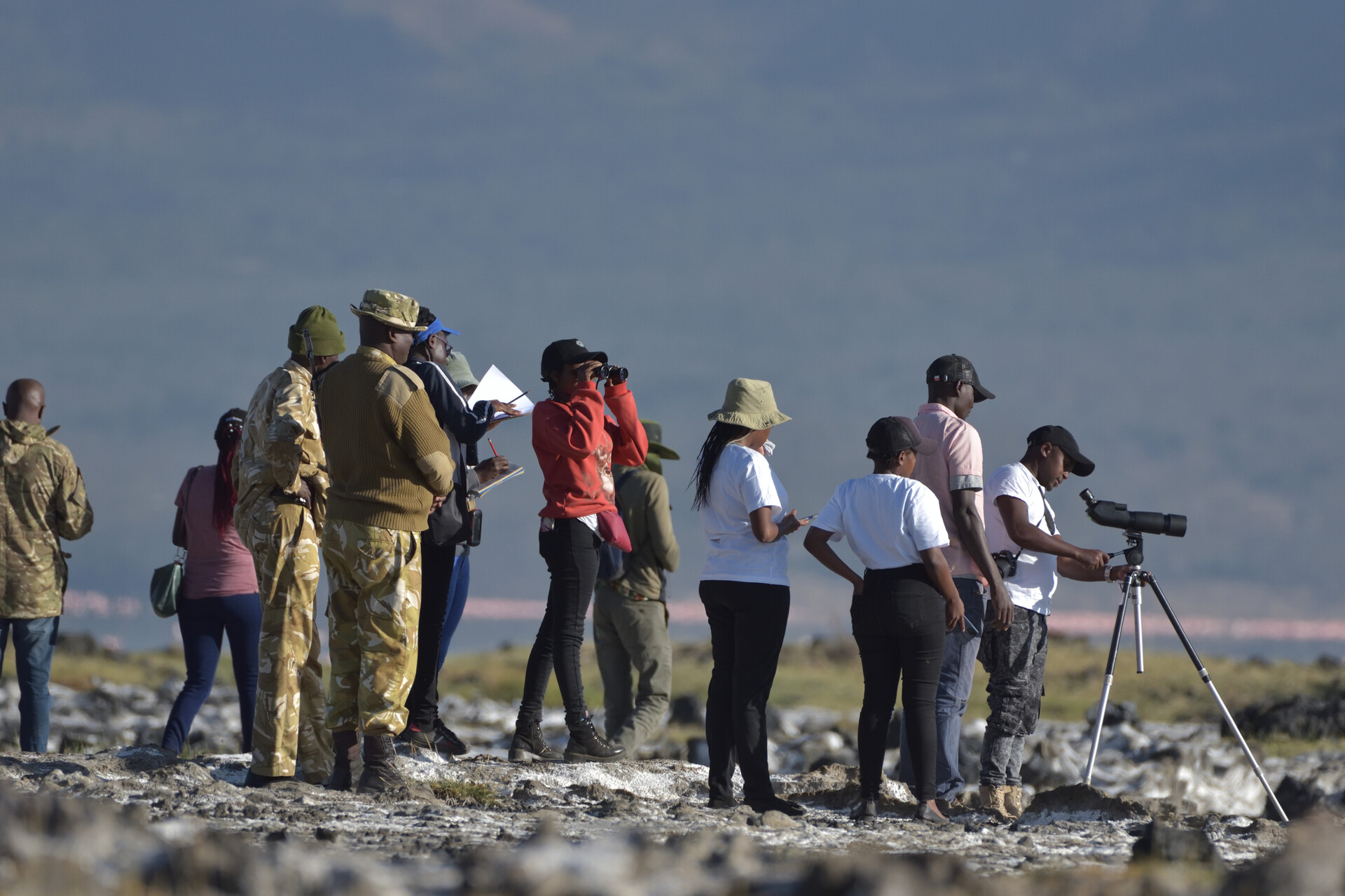
The project supported by the NaEPF will strengthen conservation action at these sites through community engagement, enhanced waterbird monitoring, stakeholder outreach, and targeted advocacy to reduce key threats, including pollution and impacts from energy infrastructure. Habitat restoration activities will address the most significant pressures while increasing ecosystem resilience. In parallel, the project will place strong emphasis on raising awareness of flyway conservation at local and national levels, using tailored messaging and events to highlight the importance of key wetland sites for both nature and people.