

 " alt="Supporting Fundación Humana Pueblo a Pueblo to empower young Cofán women and youth in the Ecuadorian Amazon">
©All rights reserved Fundación Humana Pueblo a Pueblo - Ecuador
" alt="Supporting Fundación Humana Pueblo a Pueblo to empower young Cofán women and youth in the Ecuadorian Amazon">
©All rights reserved Fundación Humana Pueblo a Pueblo - Ecuador
Supporting Fundación Humana Pueblo a Pueblo to empower young Cofán women and youth in the Ecuadorian Amazon
Grantee: Fundación Humana Pueblo a Pueblo – Ecuador
Location: Ecuador, South America
Grant Cycle: 2026-2028
Type of Grant: two-year program support, Human Welfare & Rights
Website: humana-ecuador.org
Human Welfare
& Rights
Fundación Humana Pueblo a Pueblo – Ecuador (FHPPE) is a non-governmental, non-profit organization established in 2007, dedicated to advancing the social and economic development of low- income families in Ecuador through community-based approaches that strengthen local capacities, facilitate knowledge transfer, and promote sustainable livelihood opportunities.
The organization implements integrated programmes in community development, education, and sustainable agriculture through two core initiatives: the “Support for Children” project which provides community-based education, health, and capacity-building initiatives, and the “Farmers’ Clubs” project which support smallholder farmers through training in sustainable agriculture, food security, and income- generating activities. Since 2018, the organization has increased its focus on rural, Indigenous and Afro- descendant communities, with a particular emphasis on women farmers. FHPPE seeks to strengthen community resilience, improve economic opportunities, and foster social inclusion while promoting gender equality and women’s empowerment as essential components of a sustainable development.
The Nando and Elsa Peretti Foundation (NaEPF) has a longstanding commitment to supporting Indigenous peoples, protecting threatened ecosystems, and advancing the rights, dignity, and self- determination of vulnerable communities. This commitment is now reflected in its partnership with Fundación Humana Pueblo a Pueblo – Ecuador, through an initiative designed to strengthen the social and economic empowerment of young Indigenous women in the Cofán community of Sinangoe, located in the Ecuadorian Amazon.
The Cofán ancestral territory of Sinangoe is located in a remote area of the Ecuadorian Amazon along the Aguarico River, in Sucumbíos Province, an area characterized by high levels of poverty, limited economic opportunities, and increasing environmental pressures, including ongoing deforestation and the expansion of extractive activities. The Cofán population in Ecuador numbers fewer than 2,000 individuals, living in small and geographically dispersed communities that depend heavily on forest ecosystems and natural resources for their livelihoods, cultural identity, and the continuity of their traditional ways of life.
Within this context, Cofán women face multiple and intersecting vulnerabilities associated with gender inequality, poverty, ethnic discrimination, and geographic isolation. These conditions contribute to elevated exposure to gender-based violence, limited access to information and services related to sexual and reproductive rights, and restricted economic opportunities, all of which represent significant barriers to community well-being and sustainable territorial management. At the same time, Cofán women play a critical role in preserving cultural identity, traditional knowledge, language, and sustainable forest management practices that are essential for both community livelihoods and biodiversity conservation. These socio-economic challenges are further intensified by the increasing migration of young men to urban centres and extractive industries in search of employment opportunities. As a result, many women assume primary responsibility for household income generation, caregiving, and natural resource management. This growing economic and social burden underscores the importance of strengthening women’s leadership, economic empowerment, and participation in community decision-making processes.
The project supported by the NaEPF aims to strengthen the capacities, safety, leadership, and economic autonomy of 100 vulnerable young Cofán women and 20 Cofán youth (aged 15-24), with particular attention to survivors of gender-based violence and women-headed households. The initiative combines gender equality education, community leadership development, and culturally grounded livelihood opportunities rooted in traditional knowledge systems and sustainable forest-based practices.
The initiative is structured around three interconnected areas of action. First, it seeks to strengthen the prevention of gender-based violence and promote safer, more equitable community environments through participatory training with women, men, and youth, the creation of safe spaces for women, intergenerational dialogue, and culturally adapted awareness-raising campaigns.
Second, the project will foster women’s economic empowerment by strengthening skills in traditional forest- based crafts and food processing, complemented by training in entrepreneurship, business management, and marketing, as well as the provision of start-up kits and ongoing mentoring. Activities will include mentorship from the Cofán Women’s Association “Shamecco,” technical training in regenerative gastronomy based on forest products, and the establishment of a native seed house to ensure sustainable access to plant materials used in crafts and agroforestry systems. Community fairs and exhibitions will further support market access, cultural visibility, and the promotion of Indigenous products and knowledge.
Third, the project will engage men and youth in promoting shared household responsibilities, non-violent behaviours, and more equitable gender relations through reflection spaces, community dialogue, and collective learning processes.
Together, these efforts advance more inclusive and resilient futures for Cofán communities in the Ecuadorian Amazon by empowering young women to play a greater role in community leadership, conservation, and sustainable livelihoods. Through the integration of gender equality, cultural revitalization, and forest-based economic opportunities, the project promotes stronger, more cohesive Indigenous communities while reinforcing cultural identity and long-term environmental stewardship.
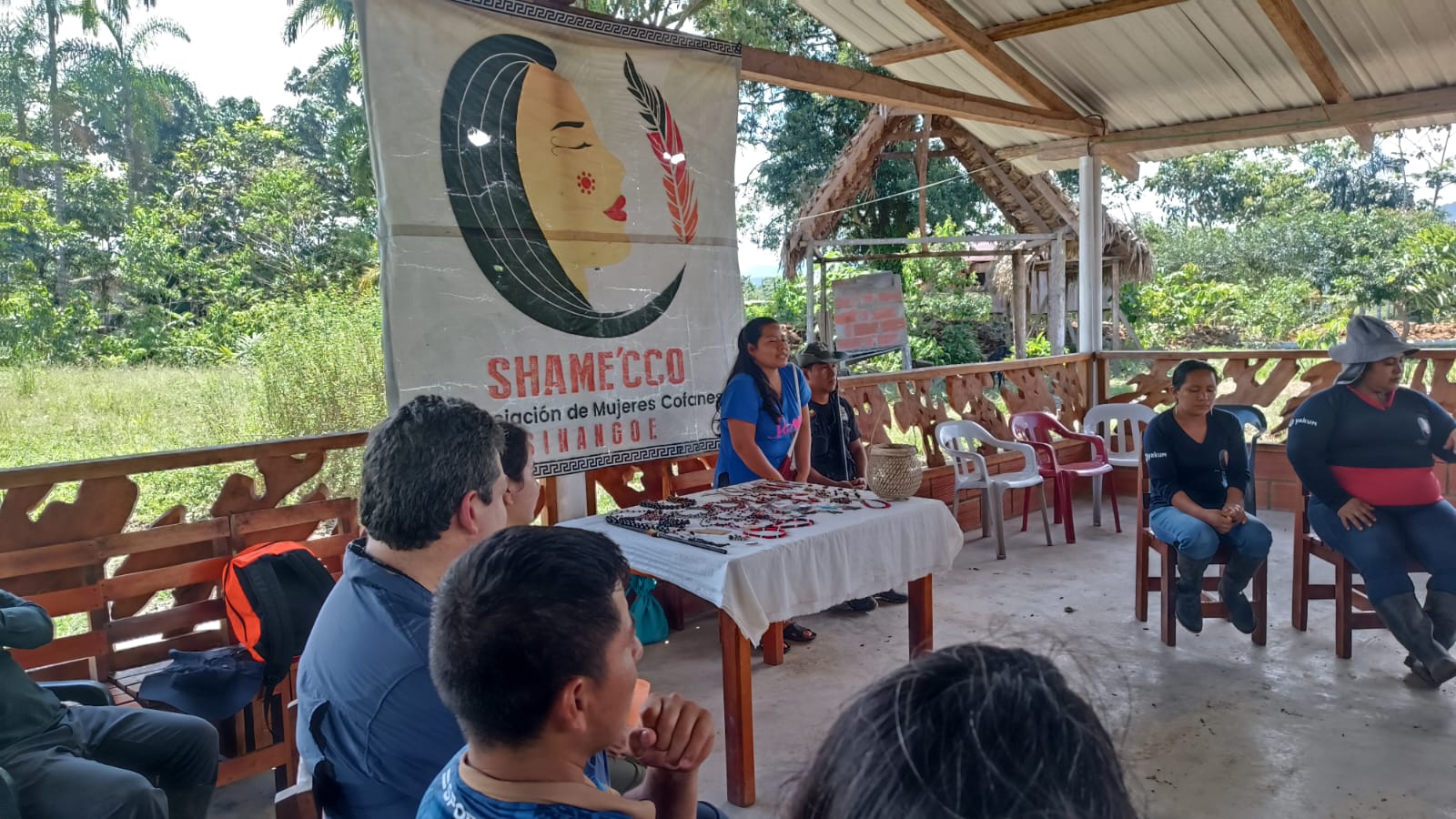 ©All rights reserved Fundación Humana Pueblo a Pueblo - Ecuador
